Waste Processing Business Loans
Setting the scene: finance for a fast-moving waste sector
The UK waste and recycling market is being reshaped by higher volumes, tighter compliance expectations, and the commercial push to sort more material, more efficiently. For many operators, growth is less about winning work and more about having the capital to service it: vehicles, balers, picking lines, trommels, bins, and the working capital to bridge payment cycles. The right loan can help you move quickly without destabilising cashflow, but the wrong structure can leave a healthy business feeling stretched.
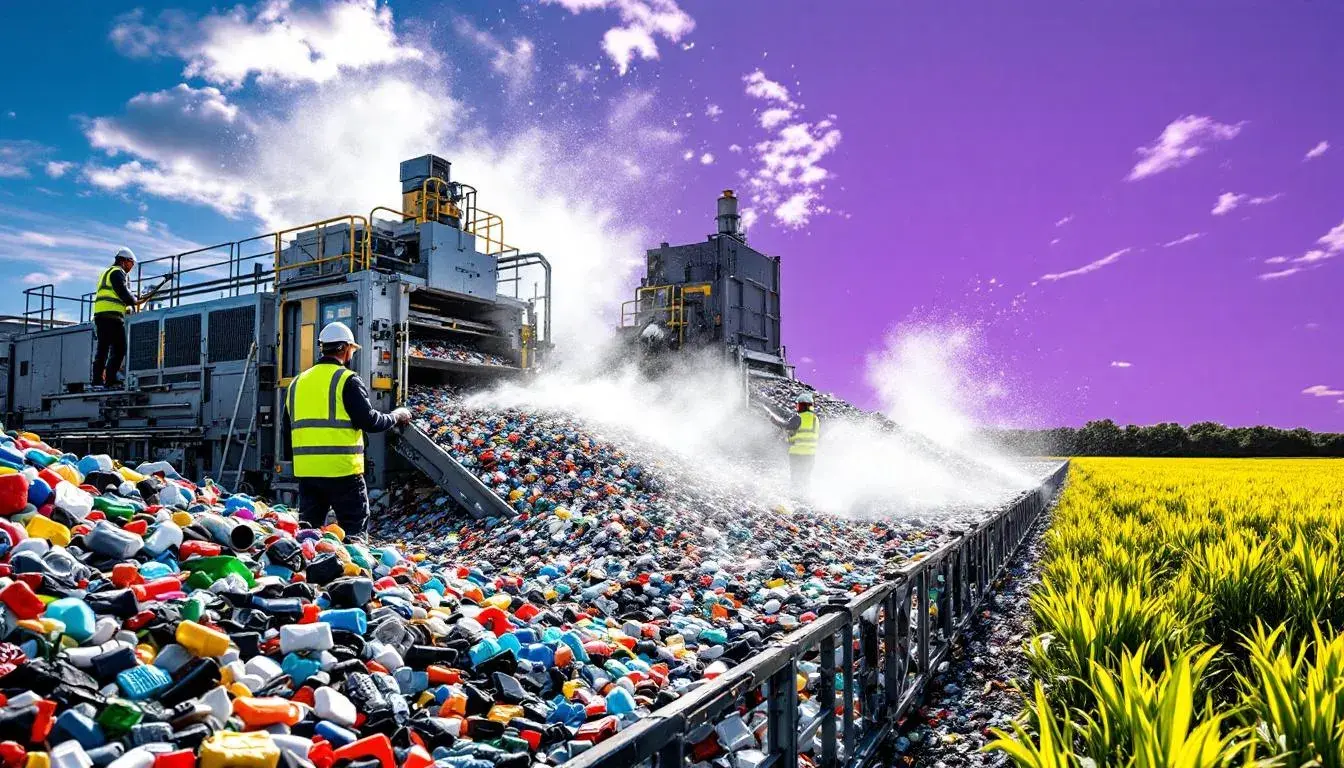
Banner image concept: a modern UK recycling plant at dawn, high-vis teams and gleaming sorting machinery against green fields, signalling innovation and sustainability.
Understanding the cost of borrowing is not just about the rate - it is about what your business can comfortably repay, month after month, under real trading conditions.
Who typically uses these loans
Waste processing business loans are generally most relevant for UK business owners running waste management, recycling, skip hire, trade waste, MRFs, or specialist processors who need funding to invest, modernise, or smooth cashflow. They can suit established firms with predictable contracts as well as growing operators scaling into new geographies or higher-capacity processing. They are also used during ownership changes, where funding is needed to acquire a competitor, purchase a fleet, or absorb a new contract. If you are investing to improve sustainability performance or operational efficiency, structured finance can also help align repayments with the useful life of the asset.
What these loans are, in plain English
A waste processing business loan is a form of commercial funding designed to support the operational and capital needs of waste and recycling companies. The borrowing can be used for purposes such as purchasing equipment, funding installation and commissioning, covering expansion costs, refinancing existing facilities, or bridging short-term working capital gaps. In the UK market, lenders offer a range of structures, including unsecured loans (where you may not need to secure the borrowing against your home), and term loans that can run over multiple years to match larger investments. Some providers in the sector offer facilities up to around £2 million with terms commonly spanning a few years, which can be attractive when you want meaningful growth capital without tying the funding to a specific asset.
How the funding is usually arranged
Most lenders will start with the basics: how long you have traded, your turnover and margins, your existing borrowing, and whether repayments remain affordable under stress. For waste businesses, they often look closely at contract quality, customer concentration, gate fees, commodity exposure, and the resilience of your route-to-market. If the funding supports equipment or a plant upgrade, lenders may want to understand the supplier, delivery timelines, and how quickly the investment turns into revenue.
The process can be quick when documentation is ready and the use of funds is clear. In some cases, funding is positioned as fast and flexible, including online enquiry journeys, while specialist lenders may tailor facilities to waste disposal equipment or recycling plant needs. A broker can help package the narrative: what you are buying, why it matters commercially, and how repayments will be met.
Standout point: well-prepared numbers and a clear plan can be as important as the headline rate.
Why waste operators use loans rather than waiting
Waiting to self-fund can be the most expensive option if it means turning away contracts, missing fleet availability, or delaying upgrades that reduce contamination and labour costs. Finance can let you scale capacity ahead of demand, replace ageing kit before downtime becomes routine, and improve forecasting by turning irregular capital spend into consistent monthly repayments. It may also support acquisitions, where buying an adjacent operator or a complementary service line can be quicker than building from scratch.
The broader trend is that waste and recycling is increasingly seen as essential infrastructure, with lenders developing sector-specific propositions including asset finance and specialist funding for recycling and drainage operations. Regional examples show how growth capital can unlock expansion plans, helping firms invest and hire even when traditional bank routes are slower or less flexible.
Pros and cons at a glance
| Feature | Potential upside | Potential downside | Best suited when |
|---|---|---|---|
| Unsecured business loan | May avoid tying borrowing to property; can be quicker | Often higher cost than secured options; lower limits for some firms | You need speed or do not want property security |
| Term loan (2-6 years is common for some lenders) | Repayments can match the life of an upgrade | Longer commitment; early settlement terms may apply | Funding a plant upgrade or expansion with clear payback |
| Specialist waste and recycling finance | Lender understands equipment, compliance and sector dynamics | Documentation may be more detailed | Your case involves plant, processing lines or niche assets |
| Acquisition funding | Helps buy competitors or add new capability | Integration risk; higher scrutiny of cashflow | You have a robust plan to combine operations |
| Asset finance (where applicable) | Uses the asset as security; can preserve working capital | Assets must qualify; deposits may apply | Buying vehicles, balers, compactors, or processing kit |
Risks and details to watch before you sign
The key is affordability under pressure. Model repayments against downside scenarios: late-paying customers, temporary commodity price dips, or a contract pause. Check whether the facility is fixed or variable, what fees apply (arrangement, broker, or documentation), and whether there are penalties for early repayment. Be clear on security: some products are marketed as not requiring your personal residence as security, but lenders may still request personal guarantees, debentures, or other business security.
Also scrutinise covenants and reporting requirements, particularly if your business is scaling quickly. If the loan funds a plant, confirm what happens if delivery slips: do repayments start immediately, or on drawdown stages? Finally, ensure the use of funds matches the facility type. Using short-term borrowing to fund long-lived assets can strain cashflow.
Next-step suggestion: before applying, prepare a one-page funding brief covering amount, purpose, timeline, and repayment source, plus the latest accounts and up-to-date management figures.
Alternatives worth considering
Asset finance or hire purchase for vehicles and qualifying equipment
Invoice finance if cashflow is constrained by long debtor days
Merchant cash advance for card-heavy waste trade counters (where appropriate)
Community development and regional lenders if you have been declined elsewhere
Equity investment if you are funding a step-change in capacity and can accept dilution
Frequently asked questions
What can I use a waste processing business loan for?
Typically for equipment, fleet, plant upgrades, site improvements, expansion costs, refinancing, or working capital. The lender will expect the use to be lawful, specific, and commercially justified.
Do I need to secure the loan against my home?
Not always. Some lenders offer unsecured facilities and may state they do not require your personal residence as security. However, other forms of security or personal guarantees can still be requested.
How much can I borrow and for how long?
It depends on turnover, profitability, existing debt, and the purpose. In the UK market, some providers offer loans up to around £2 million, with multi-year terms commonly used for larger investments.
How quickly can funding be arranged?
Timeframes vary. Straightforward cases with clear documentation can move quickly, particularly where the lender offers online enquiries and streamlined assessment. Complex plant or acquisition cases generally take longer.
Will a loan help with sustainability and compliance investments?
It can. Specialist lenders often support funding for recycling plants and waste equipment intended to improve efficiency and sustainability outcomes, which may also support compliance and profitability.
Where Kandoo fits in
Kandoo is a UK-based commercial finance broker. If you are exploring a waste processing business loan, Kandoo can help you frame the requirement, compare suitable lender options, and identify a structure that fits your cashflow and growth plans. We will help you understand the trade-offs between speed, flexibility, security, and total cost, so you can make an informed decision based on your business realities.
Disclaimer
This article is for general information only and does not constitute financial advice. Business borrowing involves risk and may affect cashflow. Terms, eligibility, and costs vary by lender and circumstances. Always review agreements carefully and seek professional advice where appropriate.
You can also use our Business loan calculator to estimate repayments and total borrowing costs.
Buy now, pay monthly
Buy now, pay monthly