Plug-In Hybrid vs Full Hybrid: Which Suits Your Driving?
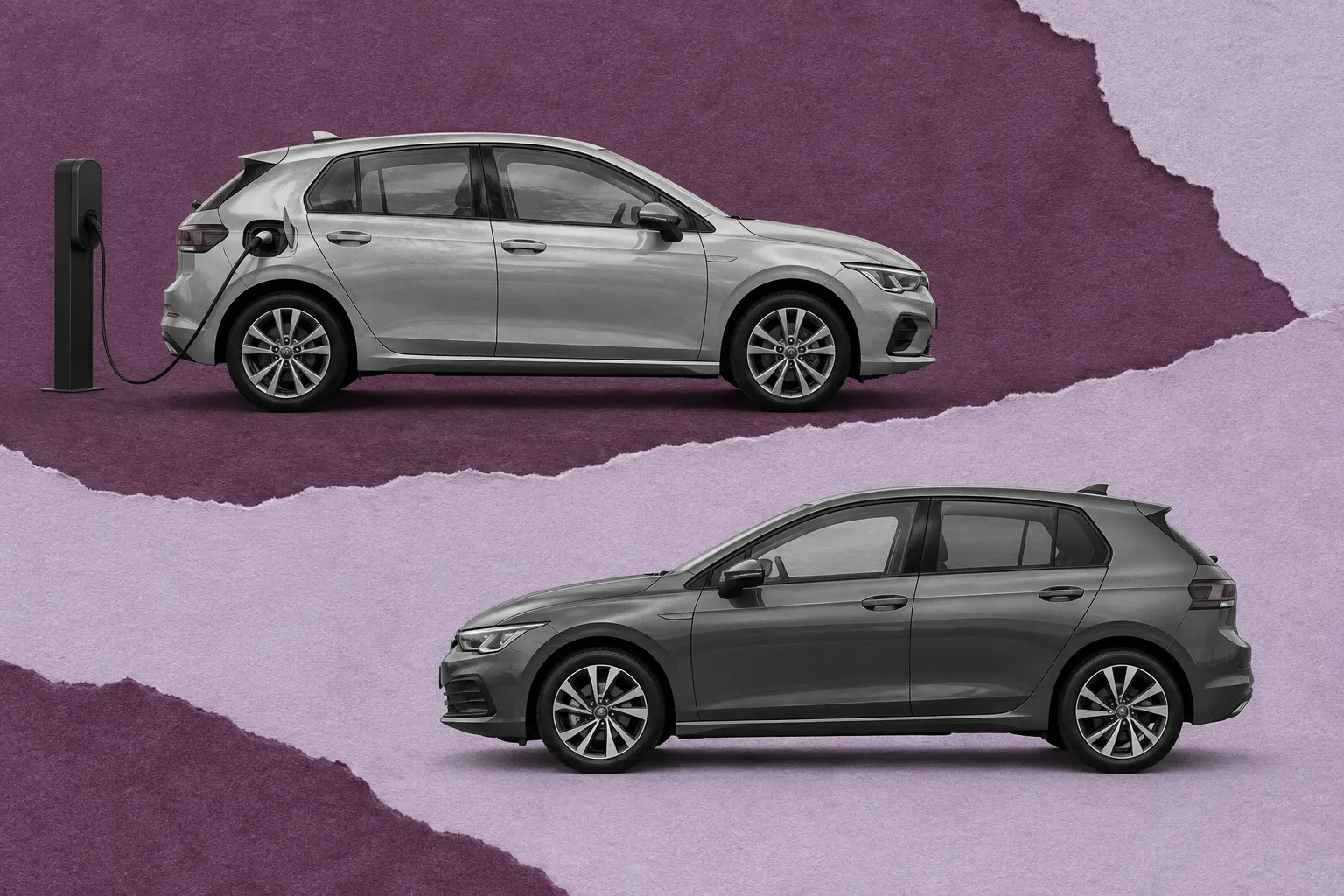
A plug-in hybrid makes most sense when you can charge it regularly; a full hybrid needs no plug. Compare your journeys, energy costs and purchase price using a simple example.
Start with the plug. If you can charge regularly at a convenient, affordable location, a plug-in hybrid may cover a useful share of your driving on electricity. If charging would be a chore you rarely complete, a full hybrid may fit the routine better.
Purchase price still matters. Lower energy spending on some journeys does not automatically repay the extra cost of the car, a charger or finance.
The difference you will notice in daily use
Feature
- External charging. Full hybrid: You do not plug it into the mains. Plug-in hybrid: Battery can be charged externally.
- Electric driving. Full hybrid: System selects engine, electric drive or both as conditions allow. Plug-in hybrid: Larger battery allows longer electric-only driving when conditions permit.
- Routine to plan. Full hybrid: Refuelling. Plug-in hybrid: Refuelling and regular charging to make use of the plug-in capability.
Both combine an engine, electric motor and battery, and recover energy during braking. A plug-in continues using its hybrid system and fuel once usable electric charge is depleted. A full hybrid can also use the engine to generate electricity.
A mild hybrid is another category. Do not assume it offers the same electric-driving capability as a full hybrid simply because the advert uses the word “hybrid”. Confirm the exact powertrain and how it operates on the model you are viewing.
Put your weekly journeys against the charging opportunity
List your usual return trips and whether charging is available between them. A 20-mile daily commute with reliable overnight charging presents a different case from a 120-mile daily motorway route and no plug at home or work.
A plug-in hybrid could cover much of the first routine electrically, depending on the car and conditions. On the longer route, a greater share may use petrol. That does not make it unsuitable, but the headline combined fuel-economy figure may bear little resemblance to your result.
Full hybrids can be convenient for mixed local driving where the system frequently recovers energy during braking. On sustained faster journeys, assess the model's actual fuel use rather than assuming the hybrid badge guarantees a large saving.
Charging has to be convenient enough to keep doing
Work out where the plug-in car will charge, what that energy costs and how long it takes. Check whether your workplace charger is reliably available and whether public parking fees apply. Some plug-in hybrids have modest charging rates or no DC rapid-charging capability.
Confirm the supplied cables and the vehicle's compatibility with the places you intend to use. If charging requires a special trip every evening, ask whether you will keep doing it during a busy or wet week.
A full hybrid removes the plug-in task but still needs fuel and maintenance. Its battery is not a source of free energy; compare the model’s real fuel use with the routine you can sustain.
When the energy-cost comparison reverses
Consider these illustrative figures, not current market quotes:
Assumption
- Full hybrid at 50 miles per imperial gallon; petrol £1.50/litre. Energy cost per mile: About 13.6p.
- Plug-in electric driving at 0.30 kWh purchased per mile; electricity 25p/kWh. Energy cost per mile: 7.5p.
- Same plug-in consumption; electricity 65p/kWh. Energy cost per mile: 19.5p.
An imperial gallon is about 4.546 litres. The plug-in assumption includes an allowance for charging losses: 0.30 kWh is energy bought, not just energy leaving the battery.
Over 6,000 electric miles, the difference between 13.6p and 7.5p is about £366. That is useful, but it may take time to offset a larger purchase price, charger installation or higher finance cost. Compare the plug-in's petrol-running cost for the rest of your mileage too.
Replace every assumption with figures appropriate to the actual cars. Do not count electric miles as costing nothing, or compare one vehicle's best-case laboratory figure with another's winter fuel receipts.
Compare the car as well as its powertrain
Check boot space, rear-seat room and payload for the exact version. Battery packaging can change luggage capacity, and different wheel sizes or trim levels can alter comfort and costs. Bring your usual luggage or pushchair if space is important.
Get insurance quotes and check the actual vehicle tax. A hybrid badge does not give a general promise of free road tax or exemption from every local charge. Include tyres, servicing and any connected-service fees in the ownership budget.
For a used vehicle, inspect the service history and remaining battery warranty. Our used electrified-car checks can help frame the questions, though a plug-in hybrid also needs its combustion-engine maintenance checked.
Try both in the conditions you drive
Try town traffic, a faster road and parking rather than a short lap around the showroom. In the plug-in, understand how the car behaves when its electric range has been used. In the full hybrid, assess acceleration and engine noise on hills or overtaking manoeuvres.
Compare finance on the same basis, including the full amount payable. If you are considering an application, the hybrid finance guide covers eligibility considerations. If most journeys could be electric, it may also be worth comparing the practical advantages and drawbacks of a fully electric car.
Use your test drive to check the plug-in when its electric range is used up, as well as when charged. That gives you a clearer picture of the car you will drive on the journeys the battery cannot cover.
Buy now, pay monthly
Buy now, pay monthly