How to Check a Used Automatic Gearbox on a Test Drive
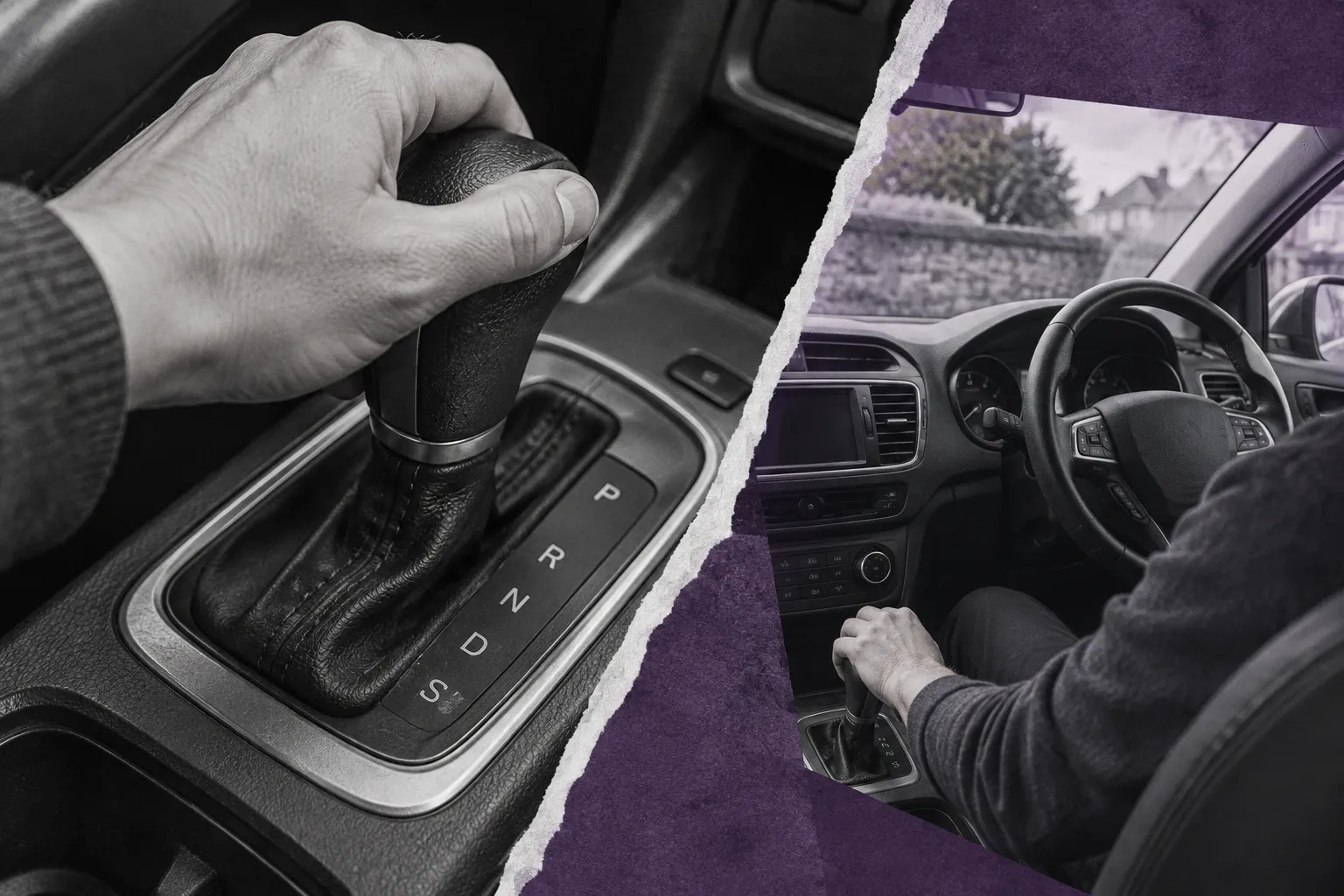
Check an automatic car calmly from cold start to parking, recognise behaviour that needs investigating and know when a specialist inspection is the better next step.
A test drive can expose delayed engagement, shuddering or a loss of drive, but it cannot establish the internal condition of a used automatic gearbox. Your job is to notice repeatable behaviour, connect it with the service history and decide whether a specialist needs to investigate.
1. Identify the Gearbox and Arrange a Cold Start
Ask which transmission is fitted to that exact engine and model year. A sales advert saying “automatic” is not enough to establish its service needs. Request the manufacturer's maintenance schedule and any invoices for gearbox work, including fluid or filter changes where required.
Read the history as a timeline. A recent service stamp may cover engine oil only. If a transmission service was due, find evidence that it was done with the correct specification rather than accepting “fully serviced” as a complete answer.
Arrange a cold start where practical and tell the seller beforehand. If the car is already warm, ask why and consider returning for a cold check. There may be an innocent explanation, but you lose an opportunity to observe its behaviour from the beginning.
Confirm that you are insured and licensed to test-drive the car. Agree a sensible route with slow manoeuvres, ordinary urban driving and a faster section if conditions permit. For the rest of the vehicle, use our used-car buying checks alongside this gearbox assessment.
Know Which Behaviour Is Normal for the Design
A CVT can hold engine revs while road speed rises instead of giving the familiar sequence of fixed-ratio shifts. Hybrid systems and dual-clutch gearboxes can also feel different from a traditional automatic, especially at low speed. A demonstration, or a drive in a sound example of the same specification, is more useful than assuming all automatics should behave identically.
2. Try Drive, Reverse and Normal Parking
With the car stationary, your foot firmly on the brake and the area clear, follow its starting instructions. Check the dashboard indicator agrees with the selected mode. Move between drive and reverse only after stopping completely.
Notice a pronounced delay before the car responds, a heavy bang or an unexpected lurch. A slight engagement sensation can be normal on some cars, so record exactly what happens rather than diagnosing a component from one movement.
A normal parking manoeuvre on level ground shows whether low-speed control is predictable or accompanied by repeated shuddering. Lack of forward creep is not automatically a defect: modes, electric drivetrains and transmission designs vary.
Never hold the car on a hill using the accelerator against the transmission. Use the brakes as intended, and do not try aggressive “stall tests” or repeated launches to stress the gearbox.
3. Observe Acceleration and Deceleration
Start with gentle acceleration. In a conventional stepped automatic, changes should make sense for the road speed and load. Listen with the radio off and notice whether the car hesitates, thumps between ratios or briefly loses drive.
When it is safe and legal, increase the accelerator pressure normally, as you might when joining a faster road. The transmission may select a lower ratio. A rise in revs accompanied by sensible acceleration is different from an unexplained flare with little increase in speed.
The car should settle back into normal driving afterwards. Use any manual mode or paddles as the handbook describes, without forcing inappropriate selections. An electronic refusal to engage a dangerously low gear is not itself a defect.
Pay attention during gentle deceleration and when coming to a stop. Write down repeated jolts or shuddering, whether they happen hot or cold, and roughly what speed you were travelling. These observations are more useful to a specialist than “the gearbox feels wrong”.
A persistent warning message, burning smell, loss of drive or severe vibration needs investigation. Stop safely if control becomes difficult and follow the handbook. A noise may come from a mount, exhaust or another part of the drivetrain; record the symptom rather than trying to name the failed component.
4. Repeat the Low-Speed Checks When Warm
After a reasonable drive, repeat a normal pull-away and a safe parking manoeuvre. Notice any behaviour that appears only at operating temperature. A five-minute loop around a forecourt may leave important questions unanswered.
On return, check for fresh warning messages. Ask whether the seller has diagnostic reports or a record of software updates and repairs. A code scan can contribute to an inspection, but a clean scan is not a guarantee that no mechanical fault exists.
Do not crawl underneath a running car or remove hot filler plugs. Leave fluid-level and leak checks requiring lifting equipment to a suitable technician.
5. Resolve Concerns Before Paying
If something concerns you, describe it to the seller and request a written diagnosis or independent inspection. Agree whether that inspection includes a cold start, road test, diagnostic scan and examination of transmission service records. Inspection packages differ, so check the scope before booking.
A discount should not replace a repair estimate. An unexplained gearbox issue can turn a seemingly affordable purchase into a bill you have not budgeted for. Our guide to warning signs in used cars helps you assess the wider picture.
Any repair promise should identify the work, when it will be completed and the evidence you will receive before collection. An unexplained fault remains unexplained even on a model with a strong reliability reputation.
Buy now, pay monthly
Buy now, pay monthly