Selling Privately vs Part Exchange: Which Leaves You Better Off?
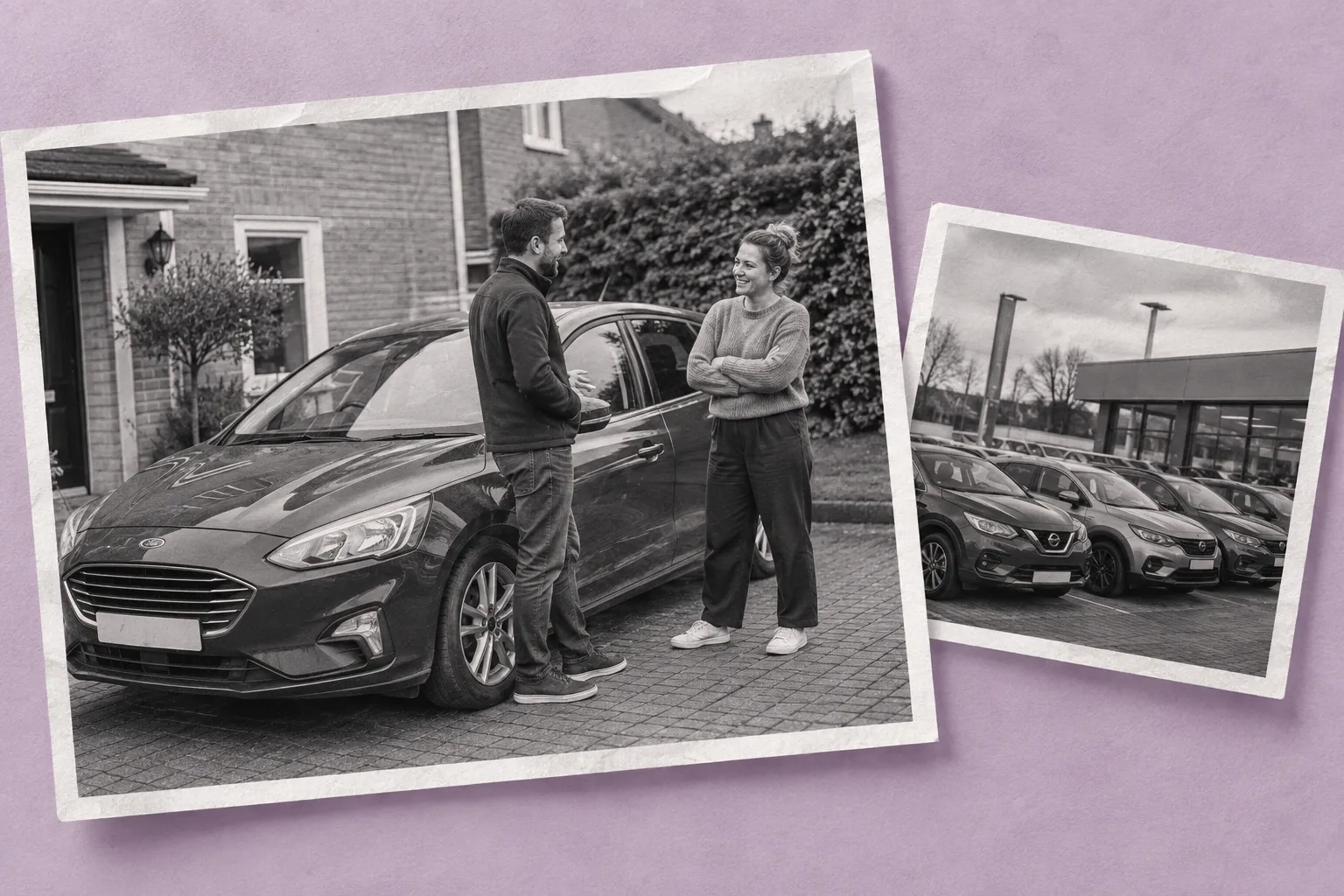
A private sale can bring a higher offer, but part exchange can change the price and convenience of the whole purchase. Compare the amount left after costs and finance.
An extra £700 for your old car sounds worthwhile. In the example below, it leaves the seller only £200 better off once selling costs and the replacement-car price are included.
That is the comparison to make: how much more money do you need to complete the change of car? A high private-sale price or a generous part-exchange allowance tells only part of the story.
£700 More for the Car, £200 Less to Pay Overall
These figures are illustrative and assume the same replacement vehicle and no additional borrowing costs:
Item
- Price received for old car. Private Sale: £8,800. Part Exchange: £8,100.
- Outstanding finance settled. Private Sale: £5,000. Part Exchange: £5,000.
- Selling and overlap costs. Private Sale: £200. Part Exchange: £0.
- Proceeds left. Private Sale: £3,600. Part Exchange: £3,100.
- Replacement price offered. Private Sale: £16,000. Part Exchange: £15,700.
- Further money required. Private Sale: £12,400. Part Exchange: £12,600.
The £200 whole-deal saving is the amount to weigh against viewings, uncertainty and time. If you need the old car every day, a firm handover date may be worth more to you than that difference.
Change any input and the result changes. If the dealer gives the same replacement discount without a trade-in, the private route becomes more attractive. Ask for both quotes; do not assume.
Where to Get the Figures for Your Own Comparison
Start with an honest description of your car: mileage, condition, service history, specification, outstanding finance and known faults. Use the same information for each valuation.
Get a part-exchange offer against the exact car you want to buy. Separately, estimate a realistic private selling price from comparable vehicles, leaving room for negotiation. Advertised prices are asking prices; they do not prove what sellers received.
A car-buying service can provide another useful reference point, but check whether its offer changes after inspection and whether it deducts fees. Record expiry dates so that a week-old valuation is not treated as guaranteed money.
Calculating What the Sale Actually Leaves You
A simple calculation is:
Sale proceeds available = agreed selling price − finance settlement − selling costs.
Selling costs might include advertising, an agreed inspection contribution, essential preparation and additional insurance while you wait. Only include costs that genuinely change between the routes. Fuel you would use anyway does not become a private-selling expense merely because you have placed an advert.
If the vehicle has HP or PCP finance, establish the lender-approved settlement process before selling. Do not transfer a car you do not own as though it were finance-free. The guide to selling a car with outstanding finance explains why the agreement type matters.
Reading a Part-Exchange and Finance Quote
Request a written breakdown showing the replacement cash price, optional extras, old-car allowance, finance settlement and the balance to pay. If finance is proposed, ask for the deposit, amount borrowed, term, APR, total payable and any final payment.
A lower monthly figure can arise from a longer term or a larger final payment. It does not necessarily mean the car is cheaper. Keep the finance comparison separate from deciding which sale route gives the better proceeds.
Our guide to part exchange with car finance covers how the old agreement and replacement purchase fit together. Ask when the existing lender will receive its money and how you will receive confirmation.
What the Extra Work Is Worth to You
Private selling involves answering enquiries, organising viewings and verifying payment. It can work well when you have time, realistic expectations and somewhere suitable to show the car.
Part exchange often allows one handover: you arrive in the old vehicle and leave in the replacement. Check that this is actually what the dealer promises, especially if the next car has not arrived or needs preparation.
Think about three possible delays. What if your old car sells before the replacement is ready? What if the new car arrives before a private buyer commits? What if the buyer reduces the offer after inspection? A modest contingency is more useful than assuming all dates will align.
Preparation That Earns Its Cost
Cleaning the car, finding both keys and gathering service records makes it easier to assess. Expensive cosmetic work is a different decision. Obtain a repair quote and compare realistic offers with and without the work before spending.
Describe known problems accurately whichever route you choose. Keep copies of the advert, valuation answers and agreed receipt. For a private sale, arrange payment and handover sensibly; do not rely solely on a buyer's screenshot claiming a transfer was sent.
Check test-drive insurance before anybody drives. Remove personal belongings and data, but retain the records that the buyer reasonably needs to understand the vehicle's history.
The Handover Still Matters
Tell DVLA when the vehicle is sold or transferred and use the appropriate process for a private buyer or motor trader. Keep confirmation. Vehicle tax does not transfer to the buyer, and the former keeper's refund normally covers remaining full months.
If you want to retain a private registration, finish that process before the handover. Update the insurer and any parking or road-charge accounts at the appropriate time.
If timing is the deciding factor, the quick-sale preparation guide covers getting the car and paperwork ready. Put a realistic handover date beside each financial quote so that the cheaper route is also one you can manage.
Buy now, pay monthly
Buy now, pay monthly