Offer finance for solar panels
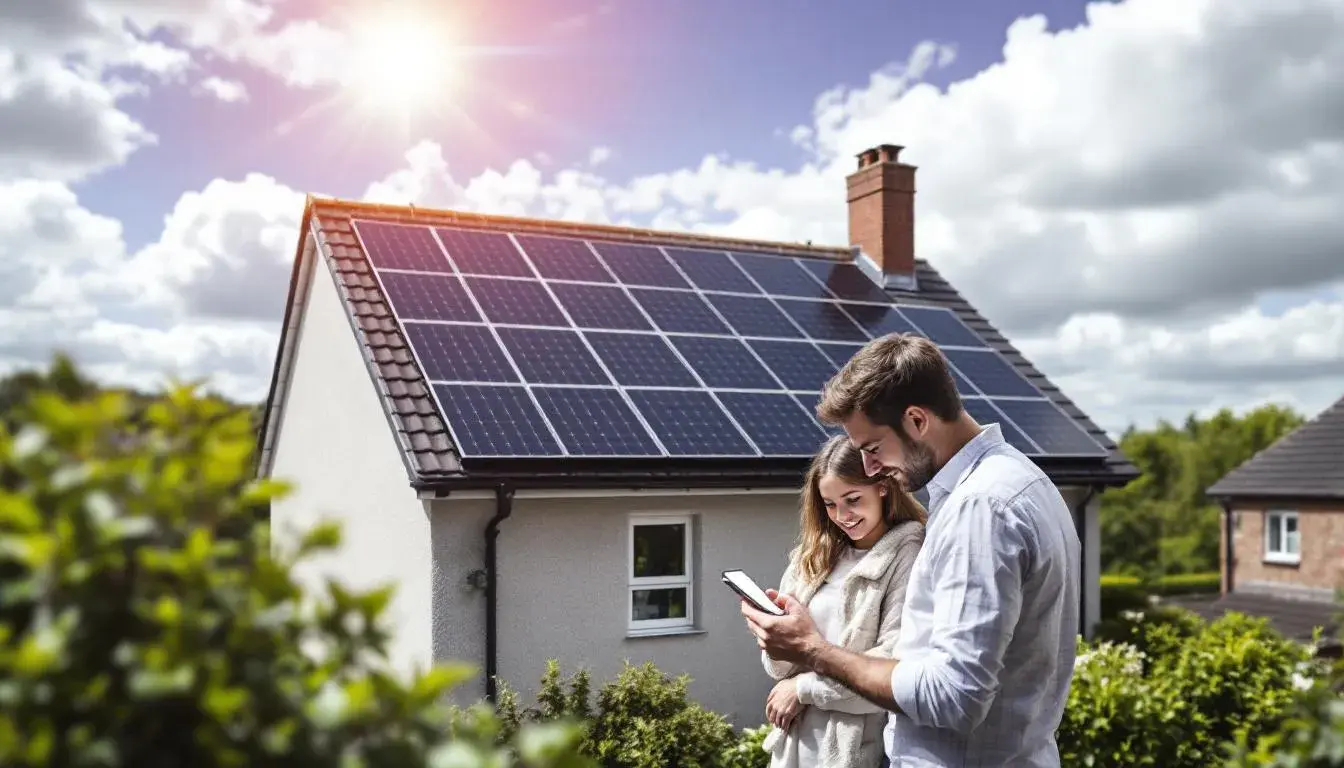
Make solar affordable without the upfront strain
Solar is no longer a niche upgrade for eco-enthusiasts. With typical UK system costs now in the £4,000-£10,000 range, financing can turn a large one-off outlay into a manageable monthly amount. Many households are choosing interest-free options that look like £241 per month over 24 months for a standard setup, keeping cashflow smooth while energy savings begin immediately.
UK solar is scaling quickly, powering millions of homes each year. Costs per kW fell again into 2025 as technology improved, and around a third of new systems now include batteries to maximise self-use. That combination means stronger returns, particularly in sunnier regions of the South and South West where payback can fall below ten years with Smart Export Guarantee payments.
Understanding APR is not just about percentages - it is about knowing your monthly outgoings and the total you will repay.
A typical break-even for households sits around the mid-teens in years nationally, but regional results vary. In high-yield areas, households can see annual savings over £1,000 and long-term benefits above £18,000 on mid-sized systems. Zero per cent VAT on eligible home energy products and local schemes can further reduce costs. Finance is what brings it all within reach, letting you install now while prices are favourable and energy independence becomes a tangible target.
Finance should be transparent and tailored. We focus on clarity around total cost, deposit choices, and whether a battery boosts your returns. Done right, you align repayments with bill savings so the investment works in real life, not just on paper.
Finance from £241 per month - typical interest-free example for a standard domestic system.
Who benefits most
If you are a UK homeowner looking to cut electricity bills, reduce exposure to rising tariffs, and add value to your property, solar financed over time can be a strong fit. Households with daytime electricity use see the fastest returns, especially when pairing panels with a battery to capture afternoon generation for evening use.
Those with suitable roof space, limited shading, and a long-term view benefit most. Even if you plan to move within a decade, solar can enhance saleability. For businesses, finance smooths capital planning while delivering double-digit returns in many cases. If cash on hand is better used elsewhere, spreading the cost keeps your liquidity while still capturing savings.
Ways to spread the cost
Interest-free plans - fixed monthly payments, often around 24 months.
Low-rate green loans - longer terms to match expected payback.
Buy now, add battery later - stage upgrades to manage budget.
Secured home improvement loans - larger systems and integrated storage.
Council schemes and group-buy programmes - discounted installs with optional finance.
Commercial asset finance - align repayments with business energy savings.
Pounds, performance and pitfalls at a glance
| Aspect | Typical Range or Outcome | What to watch |
|---|---|---|
| Upfront cost | £4,000-£10,000 for domestic systems | Roof suitability and scaffolding extras |
| Monthly example | £241 over 24 months, interest-free | Check fees and deposit requirements |
| Payback | 9-16 years regionally | South and South West quickest returns |
| Annual savings | £600-£1,200+ with SEG | Battery lifts self-consumption and savings |
| 25-year savings | Up to £18,000 for mid-size | Maintenance and inverter replacement cycles |
| ROI estimate | Around 9% for households | Compare with savings rates and inflation |
| Risks | Performance, shading, tariff changes | Choose MCS installers and robust warranties |
Are you eligible?
Most UK homeowners with a suitable roof and acceptable credit profile can access finance for solar. Lenders typically assess affordability, credit history, and property status, while installers confirm technical feasibility - roof condition, shading, orientation, and structural load. If you are leasehold or in a flat, you may need freeholder or management approval. Planning permission is usually not required for domestic rooftop systems, but conservation areas and listed buildings can be exceptions.
Incentives can materially improve the numbers. Domestic solar benefits from zero per cent VAT on qualifying installations, and some households may access free or subsidised systems through national or local schemes, subject to eligibility. Smart Export Guarantee payments add income for exported electricity. If you do not qualify for grant-funded installations, finance bridges the gap so you can still proceed and capture savings. Kandoo can introduce you to a panel of lenders offering options from interest-free to longer-term green loans, helping you match repayments to your expected energy savings.
From quote to switch-on in simple steps
Get a tailored quote with panel and battery options.
Check finance choices and calculate monthly repayments.
Submit application and receive an instant lending decision.
Book technical survey to validate roof and electricals.
Sign finance documents and schedule installation date.
Install panels, inverter and optional battery system.
Commission system and register for SEG payments.
Monitor performance via app and review savings quarterly.
Weighing it up
| Pros | Cons |
|---|---|
| Lower upfront cost with predictable payments | Credit checks and potential fees apply |
| Install sooner to capture falling tech costs | Payback depends on region and usage |
| Interest-free and low-rate options available | Roof or grid constraints may limit size |
| Savings can offset monthly repayments | Inverter and battery replacements over time |
| Adds property appeal and energy independence | Export tariffs can change in future |
Before you commit
Finance should fit your cashflow and your roof should suit your plan. Review shading from trees or chimneys, the age of your roof, and whether a battery meaningfully improves your self-consumption profile. Compare total cost, not just the monthly figure - include any arrangement fees, early repayment terms, and the expected life of the inverter and battery. Ask installers to model seasonal performance and provide degradation assumptions. Check how SEG payments vary by supplier and whether time-of-use tariffs could lift returns. Finally, keep a maintenance buffer so routine checks never become deferred repairs.
Alternatives if solar is not perfect now
High-efficiency appliances and LED retrofits to cut base load.
Home insulation upgrades to reduce heating demand.
Air source heat pumps with off-peak tariffs.
Solar thermal for hot water where PV space is limited.
Community energy or green tariffs as an interim step.
Frequently asked questions
Q: How much do solar panels cost in the UK in 2025? A: Most domestic systems fall between £4,000 and £10,000 depending on size, roof complexity, and whether you add a battery. Larger arrays and storage increase cost but can improve savings.
Q: What is a typical monthly payment if I finance? A: Interest-free examples often land around £241 per month over 24 months for a standard setup. Longer terms reduce monthly cost but add interest, so compare total repayable.
Q: How long until solar pays for itself? A: Nationally, break-even averages in the mid-teens in years, with faster paybacks of around 9 to 10 years in sunnier southern regions. A battery can shorten payback by boosting self-use.
Q: Do I still get paid for excess electricity? A: Yes. The Smart Export Guarantee pays for exported energy. Rates vary by supplier and tariff, so it is worth shopping around and reviewing annually.
Q: Is a battery worth it? A: For households at home during evenings, a battery can lift self-consumption significantly. It adds upfront cost but often improves returns and resilience during price spikes.
Q: Will finance affect my credit score? A: Lenders perform credit checks, and approved finance appears on your credit file. Affordable, on-time payments can support a healthy profile; missed payments can harm it.
How Kandoo can help
Kandoo is a UK-based retail finance broker that connects you with a panel of lenders so you can choose the plan that fits your budget and timeline. We help you compare interest-free and low-rate options, align repayments with expected bill savings, and move from quote to installation with confidence. Apply online in minutes and keep your cash working elsewhere while your roof starts paying you back.
Important information
Kandoo is a broker, not a lender. Finance is subject to status, terms and conditions, and affordability checks. Your system’s performance and savings may vary. Always consider total repayable and early repayment terms before proceeding.
Buy now, pay monthly
Buy now, pay monthly