How to Scrap a Car and Get Proof of Disposal
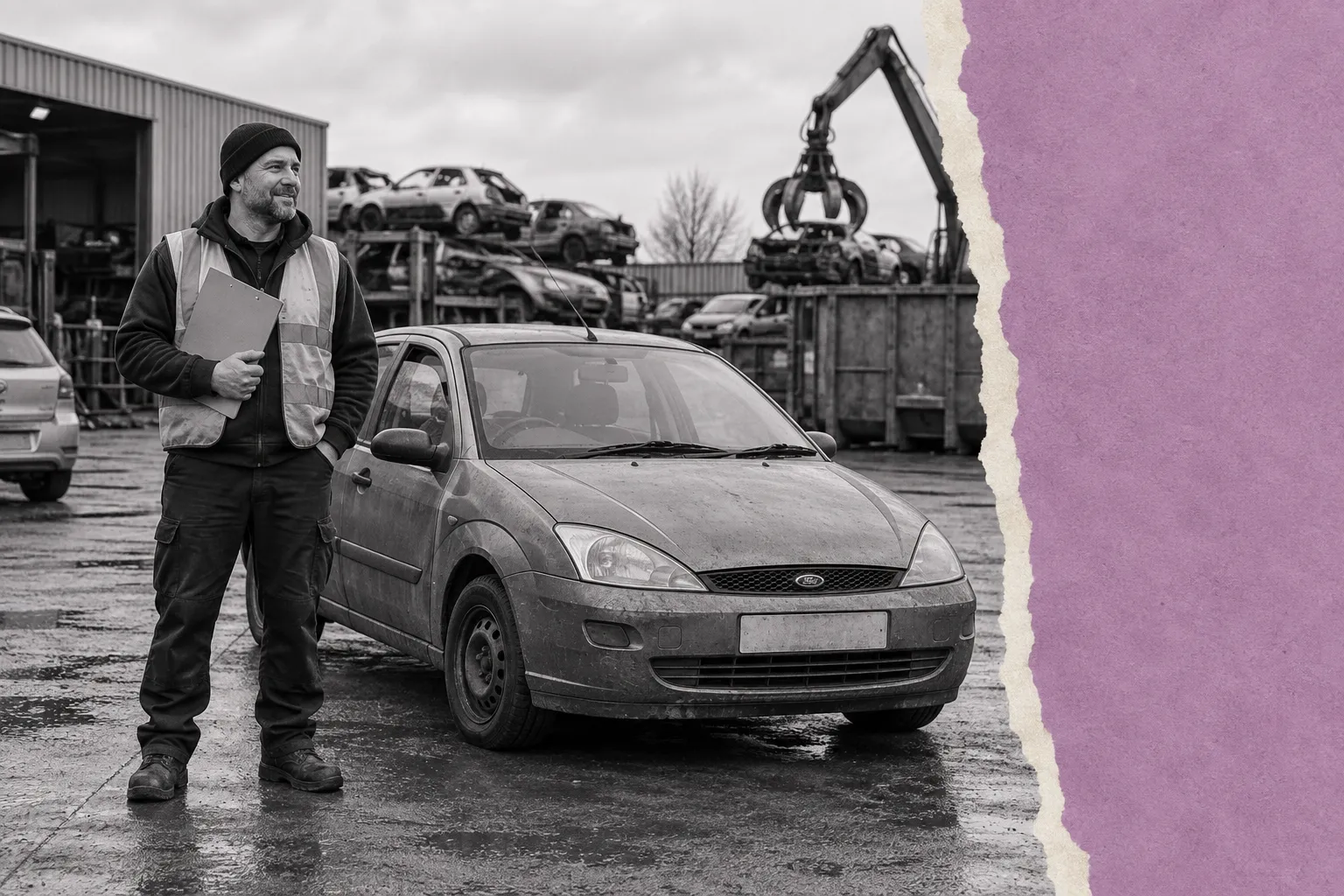
Scrapping a car involves more than handing over the keys. Check the authorised site, arrange the DVLA notification and keep the right disposal records.
“Collected for scrap” and “destroyed” are not the same thing. A collection receipt tells you who took the car; a certificate of destruction confirms the formal destruction process for a qualifying vehicle. If an authorised treatment facility repairs the car for resale instead, it will not issue that certificate.
Agree what will happen to the car before handing it over. For a car accepted and completely scrapped, the certificate should arrive within seven days.
Before booking: finance, private plates and the operator
If you are still paying HP or PCP, contact the finance company before agreeing disposal. Paying the monthly instalments does not make you free to destroy a vehicle the lender still owns. Explain the car's condition and ask for the required settlement or disposal process in writing.
A personal loan is different because the car is usually yours from purchase, but scrapping it does not wipe out the borrowing. Our explanation of a car finance settlement figure helps you identify the amount needed to clear vehicle finance.
If you want to keep a personalised registration, complete the DVLA retention process before the car goes. Do not hand it over with the assumption that you can retrieve the number once it has been destroyed.
An authorised treatment facility (ATF) is a site permitted to deal with end-of-life vehicles. Search the official register for your part of the UK and match the business name and site address, rather than trusting a logo on an advert.
If you arrange collection through a broker, ask for the destination facility and the collector's business details. A mobile number and a promise that “we deal with DVLA” leave you with little to follow up if the paperwork disappears.
Get a written quote showing the vehicle registration, collection address, amount payable and any collection or missing-parts charges. Tell the business honestly if the engine, wheels or other major components are missing. An attractive headline offer is less useful if it changes once the truck arrives.
Prepare the car and your personal information
Empty the glovebox, boot and door pockets. Remove parking permits, toll tags and anything carrying your home address. Delete phone contacts and saved destinations from the car's infotainment system, and unlink connected-car apps where available.
Check what identification the operator needs. If a collection company asks you to send documents electronically, use its confirmed business contact details and ask why each document is needed. Avoid sending an unrestricted folder of personal paperwork simply because someone requests it by text.
Do not drive an untaxed, uninsured or unroadworthy car to the site. Arrange suitable recovery instead. If the car is waiting off the road without tax, read about making a SORN; leaving it on a public road is a different matter.
At collection: record the handover and notify DVLA
Before the vehicle leaves, compare the collector's details with your booking. Obtain a receipt recording the date, registration, vehicle identification number where possible, recipient and agreed amount. The document should make clear whether the car is being accepted for scrap or bought for possible resale.
For a car being scrapped in England or Wales, payment must be by bank transfer or cheque, not cash. Keep the payment record with the receipt. Do not treat a screenshot sent by the collector as proof that a bank transfer has reached your account.
Give the ATF the V5C logbook while keeping the yellow motor-trade transfer section, following the instructions for your document. Notify DVLA yourself using the appropriate transfer process and retain the confirmation. Our keeper-change guide explains why handing over a logbook and notifying DVLA are separate steps.
Photograph the registration, VIN and condition at collection, and save the agreed quote. These details tie the vehicle that left your driveway to the receipt and later disposal records.
The documents that prove what happened
Record
- Collection or purchase receipt. What It Shows: Who took the vehicle, when and on what agreed terms.
- DVLA confirmation. What It Shows: That you notified the change or disposal.
- Certificate of destruction. What It Shows: That a qualifying vehicle has entered the formal destruction process.
- Payment confirmation. What It Shows: The amount and payment trail for the transaction.
For a car accepted and completely scrapped, chase the facility if the certificate has not arrived within seven days. Check the registration and your details rather than filing it unread. If the operator cannot explain a missing certificate, contact DVLA and the relevant environmental regulator for guidance.
Tax, insurance and accounts to close
After DVLA receives the relevant notification, vehicle tax is cancelled and any refund is normally for complete unused months. Deal separately with your insurer: ask whether to cancel the policy or move it to a replacement car, and check any fee or remaining premium.
Remove the registration from parking, charging and toll accounts once the handover is complete. Keep the disposal records somewhere searchable. If a later penalty or enquiry arrives, respond with the dated evidence rather than assuming the collection company has already sorted it out.
Buy now, pay monthly
Buy now, pay monthly