How to Choose a Car That Fits Three Child Seats
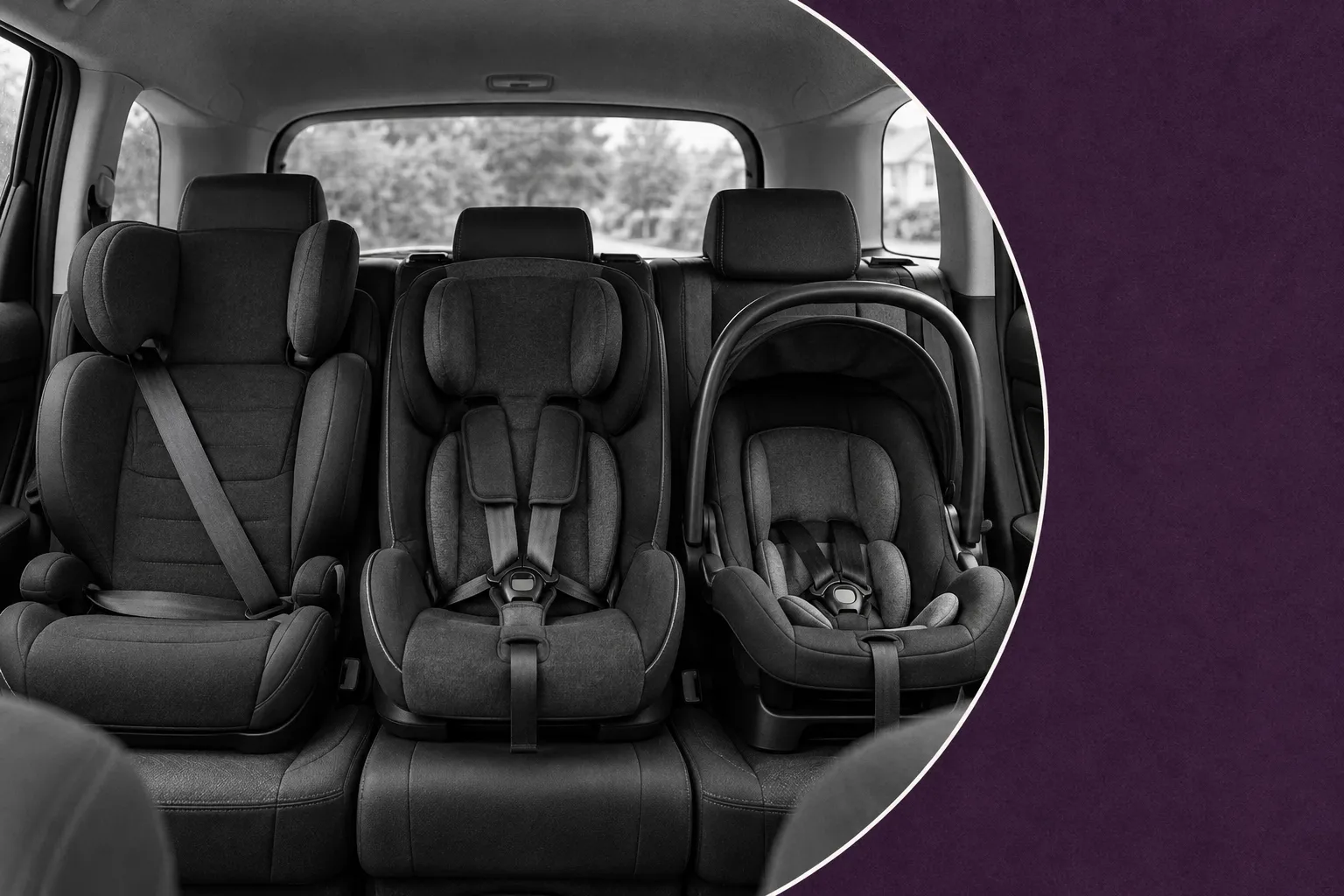
Three rear seat belts do not prove that three child seats will fit. Test the exact seats, approved positions and everyday access before committing to the car.
Take all three child seats, including their bases, to a fitting appointment before choosing the car. The test is whether they can be installed together in approved positions, with each seat working as intended. Three belts or a wide-looking bench do not establish that.
Tell the fitter each child's age, height and weight, and use the instructions for both the vehicle and the restraints. Even two cars with similar-looking rear seats can have different approved arrangements.
Which Seats Must Fit Now and Next?
Children normally need a suitable child restraint until they reach 12 years old or 135cm tall, whichever comes first. The restraint must suit the child's size and be used in accordance with its approval and instructions.
List the model of each seat or base and check its permitted height and weight range. A seat that fits the car is no good if the child has outgrown it. Equally, moving a child into an unsuitable smaller restraint simply to create space is not a solution.
If you expect a baby soon or a child is near a seat's limit, include the next stage in the discussion. You do not need to predict every future purchase, but avoid a car that only works for a few weeks with the current setup.
Find the Approved Seating Positions
Read the vehicle handbook's child-restraint section. It should explain which positions can be used and any restrictions. Then check the child-seat manufacturer's vehicle compatibility information for the exact model year and seating position.
ISOFIX attachments can make fitting more straightforward, but the number and location vary. A car with two rear ISOFIX positions may or may not allow an appropriate belt-fitted restraint in the middle. That depends on the seat, belt, bench shape and manufacturer approval.
Never improvise by using inner anchor points from two separate positions to create a central ISOFIX fitting. Do not share a belt or alter an anchorage to squeeze another seat in.
On a seven-seater, check the third row separately. Extra seats are not automatically approved for every child restraint, and access can become difficult once a restraint is installed in the second row.
The Combined Fitting Assessment
An individually secure seat can interfere with its neighbour once all three are installed. Have a competent fitter assess the complete arrangement, not just three separate fittings.
- Check that each restraint is correctly secured in its own position.
- Check that adjacent seats do not push another seat out of position or interfere with its intended operation.
- Make sure belt buckles and belt paths are accessible and correctly routed.
- Check headrest requirements and any permitted contact with the front seats.
- Confirm that doors close normally without pressing against restraints in an unapproved way.
Do not judge the fit simply by how tightly three seats wedge together. A cramped arrangement can conceal an incorrectly installed restraint. Follow manufacturer guidance on permitted contact and movement.
Support Legs and Top Tethers
Some seats need a support leg or top tether as part of their installation. The presence of ISOFIX does not remove that requirement.
Check where a support leg rests. Underfloor storage compartments can be a problem because their lids may not be designed for the forces involved. Use a position or manufacturer-approved solution only where the relevant instructions permit it; do not improvise a filler.
Attach a top tether only to the designated anchorage. A luggage hook that looks convenient is not necessarily a child-seat tether point. Ask the fitter to show you each approved fitting and leave the instructions with the seat.
Can the Adults Still Sit and Drive Properly?
Set the driver's seat for a safe, comfortable driving position before assessing the child seat behind it. Do not move the driver so far forward that control or visibility suffers just to make a rear-facing restraint fit.
Try the front passenger position too. Check whether both adults can sit normally on a longer journey. Seat recline, front-seat contact and child-restraint clearance should follow the relevant instructions.
If considering the front passenger seat for a child restraint, check the handbook carefully. A rear-facing child seat must not be placed in front of an active frontal airbag. Do not rely on an assumption that an airbag switches itself off.
Try the Daily Loading Routine
Once the installation is approved, practise putting each child in and fastening the harness or belt. Can you reach the middle position without leaning awkwardly across another child? Can an older child buckle up without accidentally releasing the neighbouring seat?
For a seven-seater, try getting into the third row with the other restraints installed. Check whether seats can still slide or fold as intended and whether any movement would require removing a child seat first.
Load the pushchair and normal bags with every required passenger seat in use. Boot figures measured with the third row folded are not useful if you need that row every day.
Record the approved positions and demonstrate the fitting to everyone who transports the children. On a used car, the vehicle checks are a separate part of the purchase; a successful child-seat fitting does not assess the rest of its condition.
If Three Seats Will Not Fit
There are limited legal exceptions to child-seat requirements, including particular situations where a third restraint cannot fit. They have conditions and are not a sensible substitute for choosing a car that accommodates the restraints your family needs.
Seek fitting advice if the proposed arrangement does not work. A different approved restraint or vehicle may solve the problem, but each combination needs checking. Avoid unofficial belt extenders or accessories unless the relevant manufacturers expressly approve their use.
Buy now, pay monthly
Buy now, pay monthly