How to Choose a Car for Towing
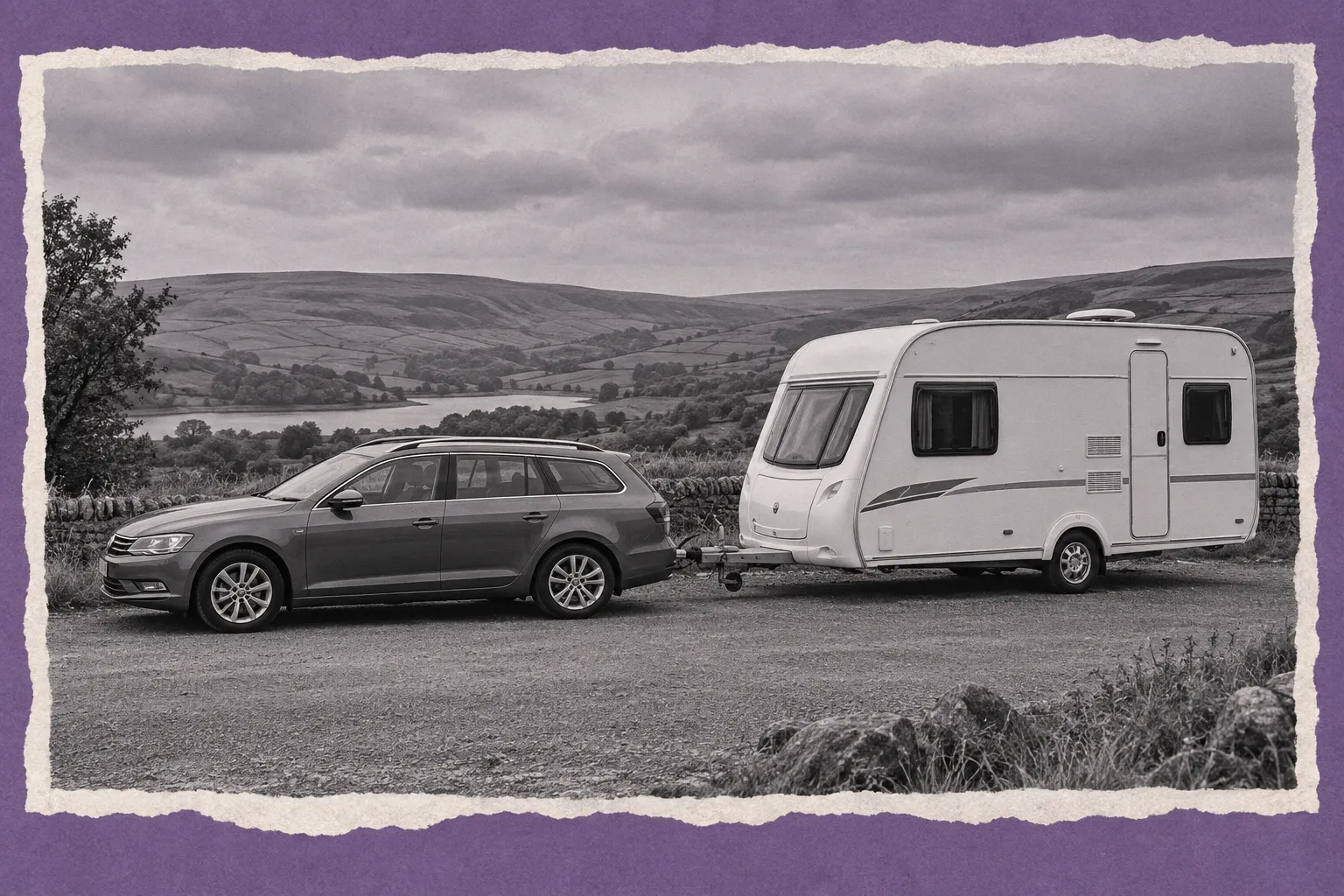
Choose a tow car by checking its exact limits against the loaded trailer and your licence. Power, size and an SUV badge are not enough to establish a safe match.
Start with the loaded trailer, not the car advert. Its weight is what the tow car has to accommodate alongside passengers, luggage and the trailer's downward load on the towball.
A suitable match must satisfy the car's towing, train-weight, axle and payload limits as well as your licence entitlement. An engine's power or a single “maximum towing” figure cannot answer all of those checks.
Collect the Trailer and Vehicle Limits
The trailer's maximum authorised mass, or MAM, is its maximum permitted loaded weight. For a caravan, you may see maximum technically permissible laden mass, or MTPLM, used for the relevant maximum figure.
The actual loaded weight is what it weighs for the journey, including equipment, luggage and supplies. Do not use an empty trailer weight when you intend to carry a substantial load.
Read the trailer plate and documentation. If you cannot confidently establish its loaded weight, arrange a suitable weighing check. An estimate that leaves out water, gas bottles, tools or holiday equipment can make an apparently suitable match unsuitable.
Obtain the manufacturer's figures for the exact vehicle, ideally using its VIN and handbook. Important limits include:
- Maximum braked towing weight: the permitted trailer weight when the trailer has the required braking system.
- Maximum unbraked towing weight: a separate, usually lower limit.
- Gross vehicle weight: the maximum loaded weight of the car itself.
- Gross train weight: the maximum loaded car and trailer combination.
- Axle limits: the permitted load on each axle.
- Towball or noseweight limit: the permitted vertical load at the coupling.
If the VIN plate does not show a train weight, GOV.UK advises that the vehicle should not be used for towing. Do not assume a towbar fitted by a previous owner proves the car is approved for the trailer you have in mind.
A 1,800kg Tow Rating Can Still Leave Only 1,600kg
Suppose a car has a 1,800kg maximum braked towing figure and a 3,500kg gross train limit. If the actual loaded car weighs 1,900kg, the train limit leaves 1,600kg for the loaded trailer, not 1,800kg.
These figures are illustrative. Other limits, including axles, noseweight, trailer limits and licence entitlement, must still be satisfied. Reducing luggage or choosing another car may be necessary; meeting one number does not override the others.
Include passengers, fuel, luggage and accessories in the car's load. The trailer's downward force on the towball also affects the tow car's loading. Ask a qualified specialist to check the proposed combination if you are unsure how the figures interact.
What Your Driving Licence Allows
Driving-licence entitlement and vehicle capability are different checks. In Great Britain, the current rules allow relevant car-licence holders who passed from 1 January 1997 to tow trailers up to 3,500kg MAM under category BE, subject to the vehicle's limits and their actual entitlement.
Drivers with older licences can have different entitlements and restrictions. Check the current licence record rather than assuming that a date alone covers every vehicle and trailer.
Northern Ireland has different car-and-trailer licensing rules. Check the nidirect guidance and your DVA entitlement if you hold a Northern Ireland licence; do not apply the Great Britain change automatically.
Legal entitlement does not provide towing experience. Training is worth considering if you are unfamiliar with manoeuvring, reversing or controlling a loaded trailer.
Legal Limits and a Comfortable Match Are Different
You may see percentage-based matching guidance, especially for caravans. Such guidance can be useful, but it is not a substitute for the manufacturer's limits, licence rules or an assessment of the actual combination.
Likewise, a car capable of moving a trailer is not necessarily a suitable or comfortable tow car for repeated long journeys. Stability, braking, tyres, loading and the driver's experience all matter.
Choose a sensible margin within the relevant limits rather than planning every trip at the maximum. Loads change, and small items added over time can use up spare capacity.
Towbar, Electrics and Visibility
Have the towbar, mounting, electrics and coupling checked for suitability and condition. Make sure any detachable components and keys are present and that the socket matches the trailer's needs.
Confirm the required trailer lights, brakes, tyres, breakaway cable or secondary coupling arrangements, and adequate rearward visibility. Suitable towing mirrors may be needed. Follow the manufacturer's instructions and official safety checks for the equipment fitted.
If buying on finance, ask the lender before adding a towbar or making modifications where the agreement requires permission. Tell the insurer about the intended use and relevant changes, and check what cover applies to the trailer itself.
Living With the Tow Car Between Trips
The car still needs to suit ordinary use. Compare parking size, insurance, servicing and energy use when it is not towing. Towing can significantly affect fuel consumption or EV range, so build that into trip planning.
For a shortlist, the running-cost guide helps organise insurance, servicing and energy quotes. A car chosen for a few towing weekends still has to earn its place in the budget for the rest of the year.
For a used example, ask about towing history alongside the usual vehicle checks. Before each trip, repeat the load and equipment checks: changing passengers, luggage or trailer contents can change the match you originally assessed.
Buy now, pay monthly
Buy now, pay monthly