Emergency Loans: What Is an Emergency Loan?
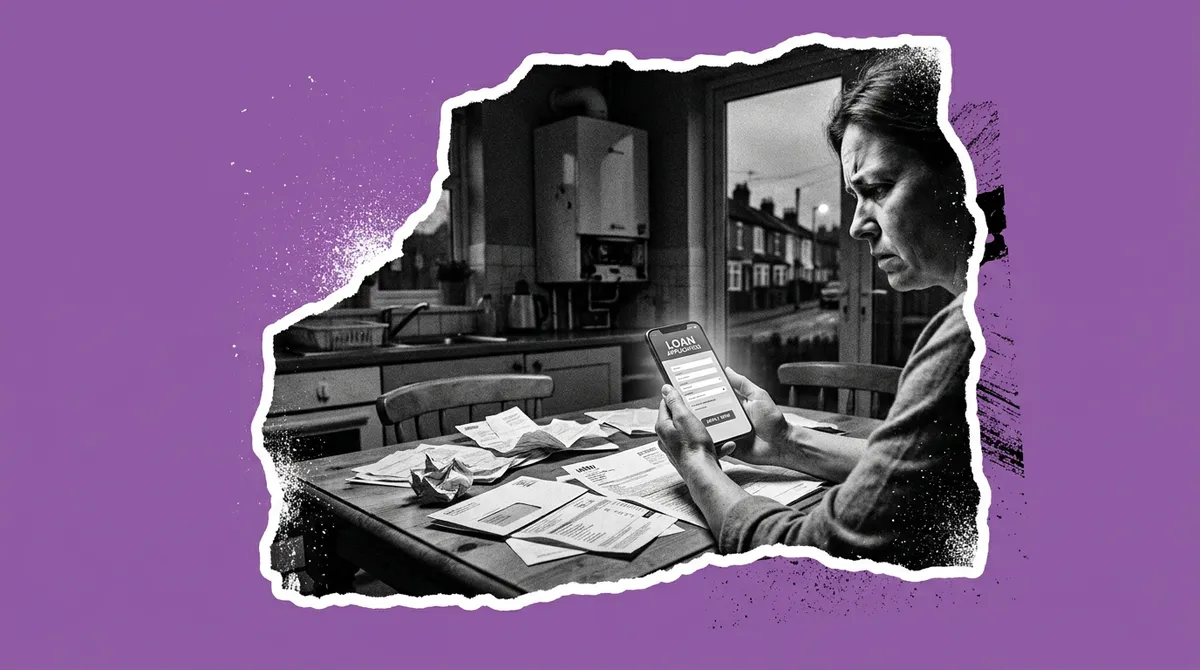
When Money Is Needed Now
Sometimes a bill lands that simply cannot wait. The boiler stops working in January, the car fails its MOT, or a repair bill arrives days before payday. In those moments, an emergency loan can look like the obvious answer, and for some people it genuinely is.
But fast money usually costs more than slow money. Before you apply for anything, it helps to understand exactly what an emergency loan is, what it will cost you in total, and what other options might be sitting quietly in the background.
Is This Guide Relevant to You?
This guide is for UK adults facing an urgent, unexpected cost who are weighing up short-term borrowing. It will be especially useful if you are unsure whether you qualify, worried about your credit file, or wondering whether cheaper or interest-free help might be available to you first.
Defining an Emergency Loan in Plain English
An emergency loan is a small, short-term loan designed to cover an urgent cost and be repaid over weeks or months rather than years. It is not a distinct legal product so much as a description of how the money is used and how quickly it arrives.
In the UK, emergency borrowing can come from banks, credit unions, online lenders and payday lenders. Some of these providers can make a decision and release funds on the same day. The loans are usually unsecured, meaning you are not putting your home or car up as security, and the amounts tend to be modest rather than substantial.
Because they are built around speed and short repayment periods, emergency loans often carry higher costs than a standard personal loan. That trade-off is the single most important thing to understand.
Speed is the product. Higher cost is usually the price of that speed.
How the Application Process Actually Works
Most UK lenders begin with an online application asking for your details, income and the amount you need. From there, a credit check is carried out. This is not optional: Experian notes that credit checks are a legal requirement for regulated lenders, not a step that can be skipped because your situation is urgent.
You will typically be asked to prove your identity, income and financial circumstances using documents such as bank statements, payslips and proof of address. Lenders also run affordability checks to see whether the repayments realistically fit your budget.
If you are approved, some lenders say money can arrive within hours. In practice, payout speed depends on the lender, how quickly verification completes, and what time of day you applied. Same-day funding is a common marketing claim, but it is never a guarantee.
Having poor credit does not automatically rule you out, though it may narrow your options and increase the cost.
Why People Turn to This Type of Borrowing
The appeal is straightforward: an emergency loan buys time when a problem cannot be postponed. UK lenders commonly describe them as cover for car repairs, boiler breakdowns, urgent household repairs, or bills that cannot wait until the next payday.
For a household with steady income but no savings buffer, spreading a £600 repair over a few months can be less damaging than missing rent, going into an unarranged overdraft, or letting a broken car cost you your job. Used once, deliberately, and repaid on schedule, it can be a reasonable tool.
The difficulty comes when emergency credit is used to patch a recurring shortfall. If the same gap appears every month, the underlying issue is budgeting or income, not access to cash. High-cost short-term credit is a poor long-term solution, and UK comparison sites and lenders consistently describe it as a last resort rather than a habit.
Weighing Up the Trade-Offs
| Advantages | Drawbacks |
|---|---|
| Funds can arrive quickly, sometimes the same day | Costs are typically far higher than standard personal loans |
| Usually unsecured, so no asset is at risk | Short repayment periods mean larger monthly payments |
| Small amounts available for genuine one-off shocks | Missed payments can trigger default fees and credit file damage |
| Some lenders consider applicants with imperfect credit | Applications still involve credit and affordability checks |
| Regulated lenders operate under FCA cost caps | Easy to become a repeat borrower if the root problem remains |
| Can prevent a bigger problem, such as rent arrears | Cheaper or interest-free help may be available and overlooked |
The Details That Deserve a Second Look
Focus on the total amount repayable, not the headline speed. The Financial Conduct Authority caps what regulated high-cost short-term credit providers can charge at £24 per £100 borrowed over 30 days, with default fees capped at £15 plus interest. A commonly used illustration is a £500 loan at a representative APR of 1,000% costing around £620 to repay over 30 days. That cap protects you, but it does not make the borrowing cheap.
Check that any lender you approach is authorised by the FCA on the Financial Services Register. Be wary of anyone promising guaranteed approval or no credit check, and never pay an upfront fee to secure a loan.
Also look at eligibility before applying, since rejected applications leave marks on your credit file. Most UK lenders require you to be at least 18, a UK resident with a UK bank account, and some set income or employment conditions such as six months in work or £1,500 net monthly income.
Cheaper Routes Worth Checking First
- Budgeting loans through the benefits system. GOV.UK explains that budgeting loans are interest-free loans for certain essential items for eligible claimants. They must be repaid in full, but there is no interest, which makes them considerably cheaper than commercial short-term credit.
- Short-term benefit advances. If you are waiting on a benefit payment, an advance may bridge the gap without new commercial debt.
- Local council and emergency assistance schemes. Many councils run hardship or welfare assistance funds that can help with food, energy and essential household items, sometimes as grants rather than loans.
- Charitable grants. Housing charities and other organisations point to grants that never need repaying, depending on your circumstances.
- Credit unions. Community lenders often offer smaller loans at capped, lower rates and take a more personal view of your situation.
- Speak to the company you owe. Utility providers, councils and lenders can often agree a payment plan, hardship scheme or breathing space before arrears escalate.
- Free independent debt advice. UK emergency support guidance routinely signposts free advice services alongside loans and grants, covering budgeting, benefits checks and debt options. Organisations such as Citizens Advice, StepChange, National Debtline and MoneyHelper cost nothing to use.
- An arranged overdraft or existing credit. Not always cheap, but worth comparing on total cost against a short-term loan.
Common Questions Answered
Can I get an emergency loan with bad credit? Possibly. Poor credit does not automatically disqualify you, and some lenders specialise in higher-risk applicants. However, all regulated lenders must still carry out credit and affordability checks, and the cost is likely to be higher.
How quickly will the money reach my account? Some UK lenders can decide and pay out the same day, occasionally within hours. Realistically it depends on the lender, how fast your documents are verified, and when you applied. Treat same-day funding as a possibility, not a promise.
How much do emergency loans cost? Regulated high-cost short-term credit is capped at £24 per £100 borrowed over 30 days, with default fees capped at £15 plus interest. A frequently quoted example is £500 repaid as £620 over 30 days. Always compare the total repayable figure.
What do I need to qualify? Typically you must be 18 or over, a UK resident with a UK bank account, and able to show income. Some lenders add requirements such as minimum monthly earnings or a period of continuous employment.
Will applying damage my credit score? A full application involves a hard search that other lenders can see. Multiple applications in a short window can look concerning, so check eligibility first where possible.
Is there any interest-free emergency help in the UK? Yes, for some households. Budgeting loans, benefit advances, council emergency assistance and charitable grants can all provide interest-free or non-repayable support if you qualify.
Are emergency loans and payday loans the same thing? They overlap. Payday and instant loans are types of emergency borrowing, but emergency loans can also come from banks and credit unions on gentler terms.
Where Kandoo Fits In
Kandoo is a UK finance broker, not a lender. That means we can help you look across a panel of lenders to see what you might realistically be offered, rather than applying blind and collecting rejections. We are clear about costs, clear about eligibility, and equally clear when borrowing may not be your best move. If a cheaper or interest-free route suits you better, we would rather you took it.
Important Information
This article is general information, not financial advice, and does not take account of your personal circumstances. Rates, caps and eligibility rules can change. Borrowing money costs money, and missed repayments can affect your credit file. Always check that a lender is authorised on the FCA's Financial Services Register, and consider free independent advice from MoneyHelper, Citizens Advice or StepChange before committing.
Buy now, pay monthly
Buy now, pay monthly