Driving in Snow: UK Legal Requirements
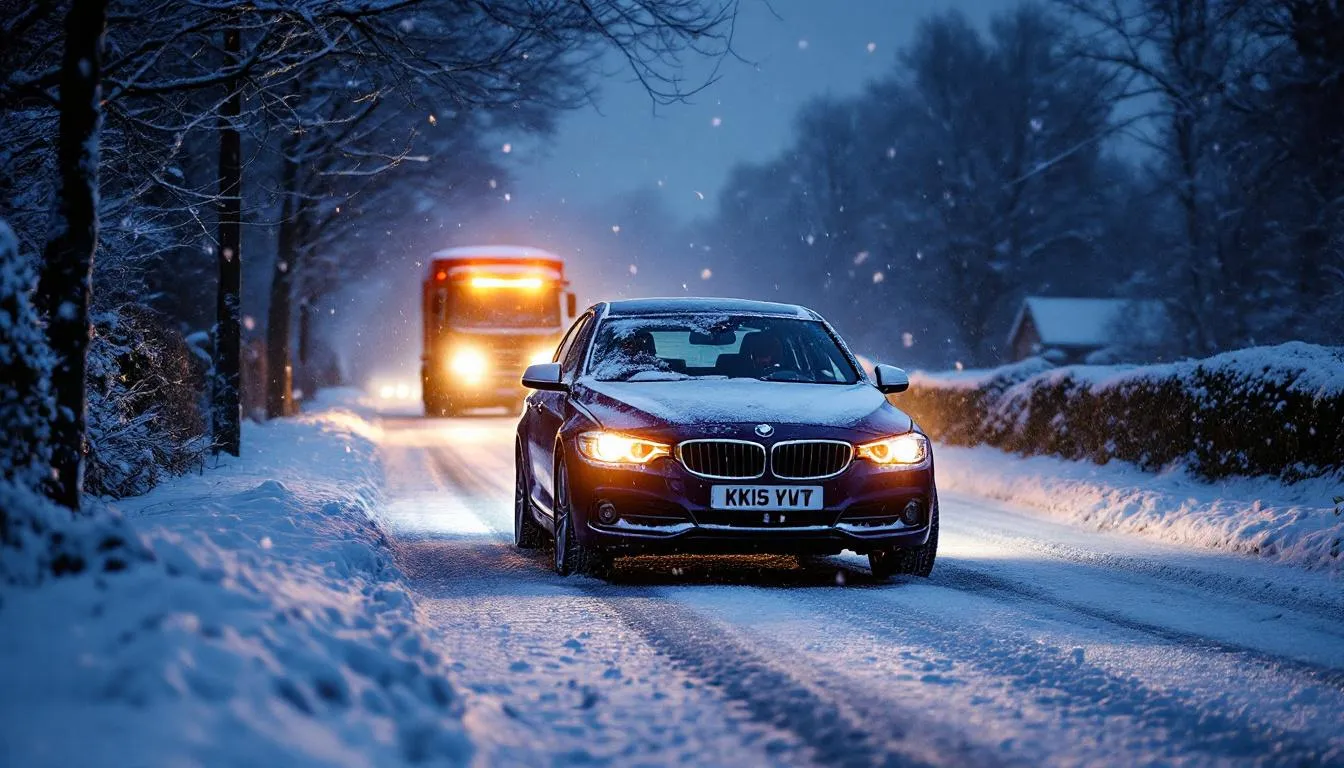
Snow in the forecast? Know the law before you set off
Snow changes the rules of the road. In Great Britain, the Highway Code is clear that safety starts before you even turn the key. You must clear all snow and ice from every window and fully demist your windscreen and mirrors so you have an unobstructed view. This is not box-ticking - it is a legal requirement supported by the Road Traffic Act. Driving off with obscured glass can lead to careless driving charges and fines. The same principle applies to your lights and number plates. If they are caked in snow, other road users cannot see you properly and automatic number plate recognition will not read your registration. Clean them before you go and use sidelights or dipped headlights in poor conditions.
Snow on the roof is not harmless. It can slide forward under braking and block your windscreen or fly backwards onto following vehicles. Remove it completely. Use fog lights only when visibility is seriously reduced, then switch them off as conditions improve - misusing them dazzles others and obscures your brake lights. Once moving, remember that stopping distances in snow and ice can be up to ten times greater than in the dry. Keep well back, maintain smooth inputs, and expect treated roads to remain slippery.
There is no legal mandate for winter tyres or snow chains in the UK, but they can transform grip below 7°C. The legal minimum tread depth is 1.6mm, yet 3mm is strongly advised for winter. Check your tyres, wipers and screenwash rated for sub-zero temperatures. If forecasts warn of severe conditions, consider whether the journey is essential. If you must travel, carry an emergency kit - de-icer, scraper, warm clothing, water, snacks, phone charger and a small shovel. A little preparation reduces risk, protects your licence and can save money in the long run.
Understanding winter rules is not just about regulations - it is about arriving safely and avoiding avoidable costs.
Who benefits from this guidance
This guide is for UK drivers who want clear, practical steps to stay legal and safe when it snows. Whether you are commuting, doing the school run or managing a company car, the same standards apply across GB. It is also useful if you are considering optional winter kit such as tyres, snow socks or breakdown cover and want a measured view of cost versus benefit. New drivers will find a straightforward checklist to build good habits. Experienced motorists get a timely refresher on what has changed, what remains law, and how to reduce risk when roads turn icy.
Practical choices when snow hits
Delay or cancel non-essential journeys until conditions improve.
Prepare the car properly - clear windows, demist, clean lights and plates.
Fit winter or all-season tyres for better cold-weather grip.
Adjust driving style - slow speeds, gentle inputs, bigger gaps.
Use public transport or car share if routes are operating safely.
Equip an emergency kit - de-icer, scraper, warm layers, snacks, shovel.
Book a winter check - battery, tyres, wipers, screenwash, antifreeze.
Consider driver training for skid awareness and winter techniques.
Cost, impact, returns and risks
| Option | Typical cost | Impact on safety | Potential saving or return | Key risk |
|---|---|---|---|---|
| Delay or cancel trip | £0 | Very high - avoids exposure | Avoids accident, breakdown and excess | Missed appointment or scheduling impact |
| Proper clearance and demisting | £5-£20 for de-icer and scraper | High - restores full visibility | Avoids fines up to £1,000 and points | Time pressure leads to shortcuts |
| Winter or all-season tyres | £300-£700 per set | High - shorter stopping below 7°C | Fewer collisions and less wear on summer set | Upfront cost and storage space |
| Emergency kit | £20-£60 | Medium - mitigates disruption | Avoids recovery fees and lost time | False sense of security |
| Public transport | £3-£30 per journey | Medium - removes driving risk | Parking and fuel savings | Service cancellations in severe weather |
| Winter service check | £40-£120 | Medium to high - fewer failures | Extends component life, fewer call-outs | Unplanned garage findings increase bill |
| Driver training | £80-£200 | Medium - better control in skids | Lower incident likelihood over time | Skills fade without practice |
| Breakdown cover upgrade | £30-£100 annually | Medium - faster assistance | Reduced downtime and recovery costs | May duplicate cover you already have |
Who must comply and when it applies
All drivers in Great Britain - private motorists, fleet users and learners - must ensure clear visibility before driving in snow or ice. That means every window free of snow and ice, fully demisted screens and mirrors, and clean, visible lights and number plates. These duties apply from the moment you set off, not once you are moving. If you drive away with obstructed vision, you risk careless or inconsiderate driving penalties, fines, and points on your licence. Insurers can challenge claims if you fail to take reasonable care, so good preparation protects both safety and cover.
Tyres remain central. The legal minimum tread depth is 1.6mm across the central three-quarters, yet 3mm is recommended in winter for better braking and steering. Winter tyres are optional in the UK, but strongly considered for rural, hilly or colder regions. Company car and van drivers should follow employer policies on winter equipment and ensure vehicles are roadworthy before departure.
If you are budgeting for winter kit or a timely service, Kandoo can help you explore finance options through a panel of lenders, so you can spread essential costs sensibly and keep your car compliant when the weather turns.
Ready-to-roll winter checklist
Check forecast and traffic alerts for your full route.
Clear every window and fully demist mirrors and glass.
Clean all lights and number plates until readable.
Remove all snow from the roof and bonnet.
Set heater, fans and air-con to keep screens clear.
Switch to dipped headlights in poor visibility.
Leave large gaps - stopping distances can be x10.
Carry winter kit and keep fuel above half.
Comparing your choices at a glance
| Decision | Pros | Cons |
|---|---|---|
| Drive today vs postpone | Maintains schedule - urgent travel possible | Higher collision risk - potential fines and delays |
| Standard tyres vs winter tyres | Lower upfront cost - no swap needed | Longer stopping in cold - reduced grip on snow |
| Dipped headlights vs fog lights | Good visibility without dazzle | Less penetration in extreme fog or blizzards |
| Overtake a snowplough vs wait | Slightly faster if safe and clear | Flying snow, hidden ice, lane not yet cleared |
| Public transport vs car | Removes driving risk - parking savings | Service disruption - reduced flexibility |
Before you commit to a snowy journey
Pause and plan. Check multiple forecasts and review live road updates, not just headlines. If visibility is poor or ice warnings are in place, ask whether the trip is essential. Leaving with snow on glass or the roof is avoidable and can attract penalties, especially if it leads to careless driving. Stopping distances increase sharply, so build in extra time and cut speed naturally rather than relying on heavy braking. Keep fuel above half, phones charged and ensure washer fluid is winter rated to prevent freezing. If in doubt, delay. The safest and often cheapest decision is to travel when conditions improve.
Sensible alternatives when conditions bite
Work from home or reschedule appointments to daylight hours.
Use rail or tram services operating on gritted corridors.
Share a lift with a confident winter driver on appropriate tyres.
Book overnight accommodation to avoid late return trips.
Arrange delivery or remote services instead of collecting in person.
Your winter driving questions answered
Q: Is it illegal to drive with snow on my windscreen or roof? A: Yes if it obstructs your view or creates a hazard. You must clear all windows and it is safest to remove roof snow to prevent it sliding onto the windscreen or other vehicles.
Q: Do I have to fit winter tyres in the UK? A: No. There is no UK mandate. Winter or all-season tyres are optional but improve stopping distances and traction below 7°C, especially in rural or hilly areas.
Q: What lights should I use in snow? A: Keep lights clean. Use sidelights or dipped headlights in poor conditions. Only use fog lights when visibility is seriously reduced, and switch them off when it improves.
Q: How much extra space should I leave? A: In snow and ice, stopping distances can be up to ten times longer. Leave a very large gap and brake gently to avoid skids.
Q: Can I be fined for not demisting properly? A: Yes. Partial clearing is not enough. Driving without full visibility can lead to fines and penalty points for careless or inconsiderate driving.
Q: Is it safe to overtake a snowplough or gritter? A: Only if the lane is clearly passable. Ploughs can throw snow sideways and gritters reduce grip immediately behind them. Patience is usually safer.
How Kandoo helps you prepare
Winter readiness can mean small purchases today that prevent larger costs tomorrow. Through Kandoo, you can compare finance options from a panel of lenders to spread the cost of winter tyres, servicing or essential repairs. That way, you keep your car compliant, improve safety in low temperatures and protect your budget without delaying important maintenance.
Important legal and safety note
This article provides general guidance for GB drivers and does not replace the Highway Code or professional advice. Laws and policies can change. Always check the latest official guidance and your vehicle handbook before travelling in adverse weather.
Buy now, pay monthly
Buy now, pay monthly