Car Written Off on Finance: Who Gets the Insurance Payout?
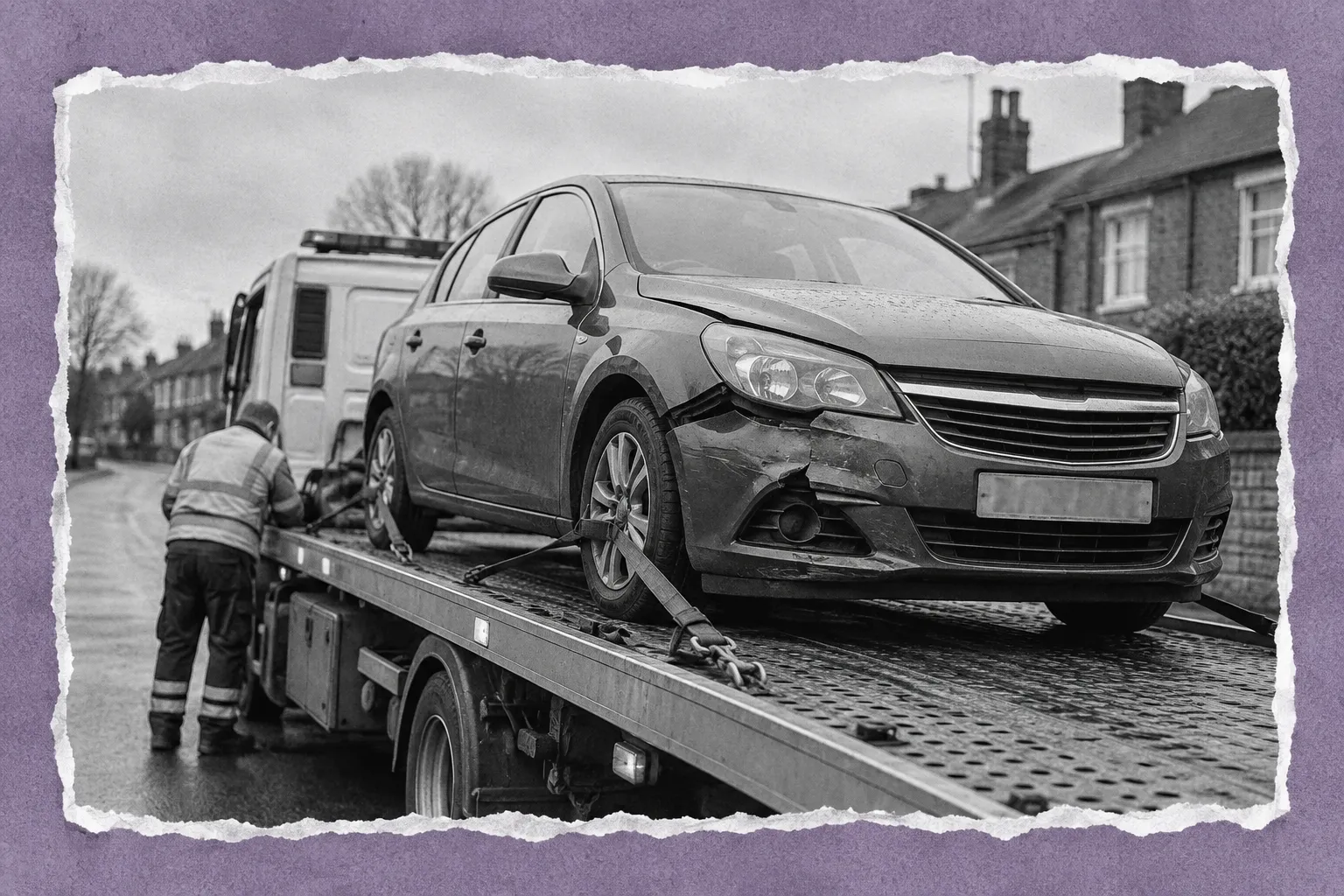
See how a write-off payout interacts with HP, PCP and a personal loan, and calculate whether the insurance settlement leaves a surplus or a shortfall.
If your car is written off while on HP or PCP, the insurer will normally need to deal with the finance company's ownership interest. The payout is commonly used to settle that agreement first; any surplus or shortfall is worked out afterwards.
The difficult part is that the car's insured value and the amount needed to clear the finance are two different figures. Losing the car does not automatically cancel the debt.
Where the insurance payment goes
For HP and PCP, give the insurer the lender's name and agreement details. Ask both organisations to confirm how the claim payment will be sent and applied. It may go directly to the lender, with any remainder dealt with afterwards.
Do not spend a payment received into your account until the lender's interest and settlement instructions are clear. Receiving money personally does not mean the existing finance has disappeared or that all of it is available as a deposit on another car.
If you used a personal loan
With an unsecured personal loan, the lender does not normally own the car just because it funded the purchase. You may receive the insurance money yourself, but the loan continues unless repaid or otherwise resolved. Tell the insurer how you bought the car so it handles the claim on the correct basis.
A £12,000 valuation can still leave £1,500 to pay
Suppose the insurer agrees a market value of £12,000 and deducts a £300 excess, leaving £11,700. The lender's valid settlement figure is £13,200. These figures are illustrative.
If the full £11,700 is applied to the finance, the remaining amount is £13,200 − £11,700 = £1,500. You need to agree how that £1,500 will be dealt with. Do not assume it will be included in a new agreement or automatically spread over the old remaining term.
In the reverse situation, a net payout of £14,000 against a £13,200 settlement would suggest an £800 surplus, before any other amounts properly due. Ask for the closing statement so you can see the actual allocation.
Our guide to negative equity explains why the value of the vehicle and what you owe can diverge.
A standard motor policy generally assesses the car's value immediately before the loss, subject to its terms. It does not normally increase that value simply because the finance balance is higher. Your deposit, interest and depreciation all affect the gap.
Ask the lender for a current settlement quote with an expiry date. Do not simply add the remaining instalments: the early-settlement calculation can differ. Our guide to car finance settlement figures explains that distinction.
While the insurer and lender arrange payment
Continue contractual payments unless the lender agrees a different arrangement. The insurance claim can take time, and cancelling a Direct Debit without agreement can create arrears.
Tell the lender if another payment will be taken while the insurer is arranging settlement. Ask whether a refreshed quote will be needed and how any overpayment will be returned. Keep dates and reference numbers so the two organisations can reconcile the account.
If you cannot afford the continuing payments or shortfall, contact the lender before missing one and seek free debt advice. Explain that the vehicle is a total loss and provide the claim status. A discussion about support is different from assuming payment obligations have stopped.
Before accepting an offer
If you have GAP insurance
If you already have GAP cover, notify that provider promptly and read its claim instructions. Different policies cover different gaps and contain limits and exclusions. A finance GAP product and a return-to-invoice product are not interchangeable descriptions.
Some providers want to review the motor insurer's offer before you accept it. Keep the purchase invoice, finance settlement quote and insurer's valuation. Do not assume every excess, arrear or amount carried over from an earlier car is covered.
The guide to GAP insurance explains the general purpose of this cover. The decision on your claim depends on your existing policy wording.
If the valuation looks wrong
Check that the insurer has used the correct model, trim, age, mileage and pre-loss condition. Ask for an explanation of the valuation and deductions. Provide comparable vehicle evidence if you believe the figure is too low.
Use the insurer's complaints process if it cannot resolve the issue. The Financial Ombudsman Service can consider eligible unresolved complaints about vehicle valuations.
Base a challenge on the car's fair pre-loss value. The amount you owe matters to your budget, but does not prove the insurer's valuation is wrong.
Keeping the salvage or buying a replacement
If you want to keep a repairable written-off car, discuss it with both the insurer and the finance company before accepting a salvage arrangement. The lender's ownership interest still matters, and not every category can return to the road.
Before committing to another vehicle, obtain a realistic picture of the old agreement's closure, any remaining debt and the deposit actually available. Ask for written confirmation when the finance is settled and check the final statement. That prevents a new-car budget from being built around money already needed to clear the old one.
Buy now, pay monthly
Buy now, pay monthly