Car Finance for Wheelchair-Accessible Vehicles
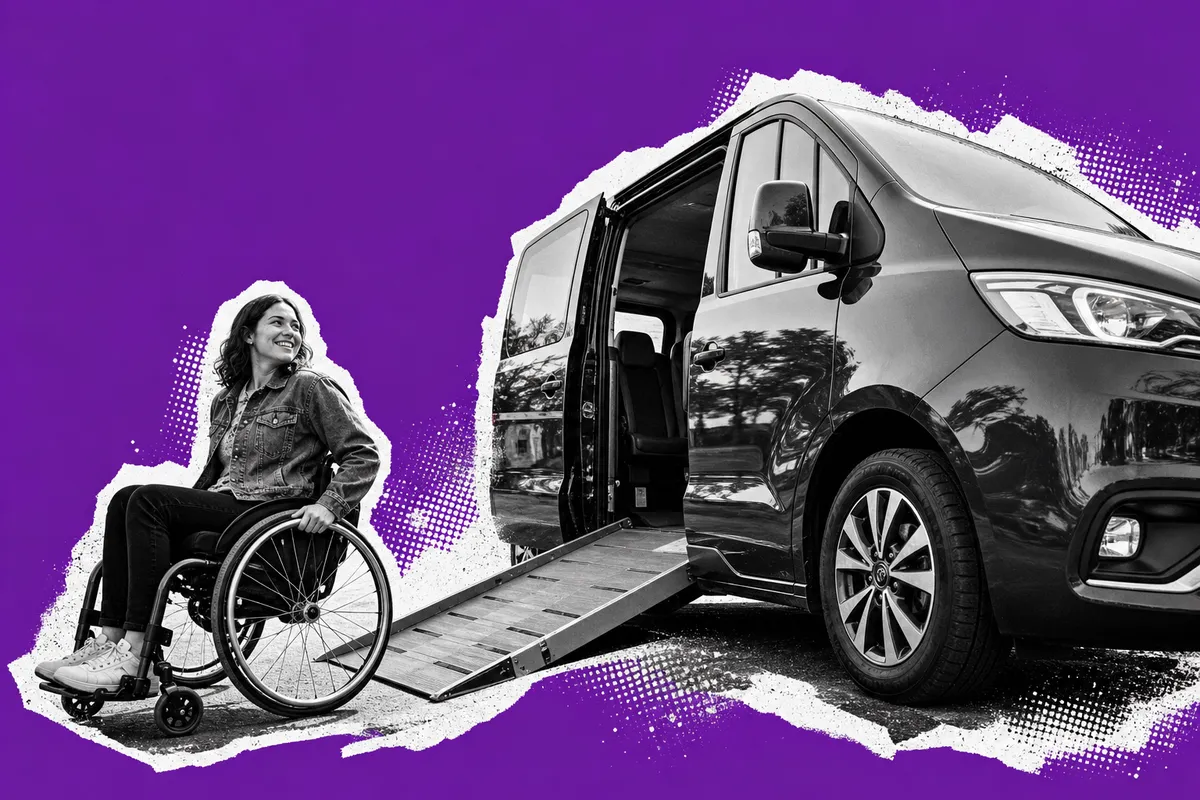
Getting Moving Again
A wheelchair-accessible vehicle can change everyday life. It means the school run, the shops, hospital appointments and days out become straightforward rather than something you have to plan around.
The difficulty is usually cost. Adapted vehicles are more expensive than standard cars, and paying in one go isn't realistic for most households. Finance can spread that cost into monthly payments. This guide explains how it works, in plain English, with no assumptions about what you already know.
Who This Guide Is Written For
This is for anyone in the UK looking to buy a wheelchair-accessible vehicle (WAV) and spread the cost. That includes disabled drivers, wheelchair users who travel as passengers, parents of disabled children, family carers, and anyone supporting a relative who needs adapted transport.
What a Wheelchair-Accessible Vehicle Actually Is
A wheelchair-accessible vehicle is a car or van that has been converted so a wheelchair user can travel while seated in their chair, either as a passenger or, in some cases, as the driver. Conversions are usually carried out by specialist firms and typically involve lowering the floor, fitting a ramp or powered lift, adding restraint systems to secure the wheelchair safely, and sometimes repositioning seats or fuel tanks.
There are two broad types. Rear-entry WAVs load the wheelchair from the back, which is often the more affordable option. Side-entry WAVs allow the user to sit alongside other passengers and are usually more expensive.
Separately, you may hear about adaptations rather than full conversions - hand controls, left-foot accelerators, swivel seats, steering aids or hoists. These are fitted to a standard vehicle and are generally far cheaper than a full WAV conversion.
A WAV is a vehicle you travel in while remaining in your wheelchair. An adapted car is one you transfer into.
How the Finance Side Works
WAV finance works much like standard car finance, with a few practical differences. The most common routes are Hire Purchase (HP), Personal Contract Purchase (PCP) and unsecured personal loans.
With Hire Purchase, you pay a deposit and then fixed monthly payments over an agreed term, usually two to five years. The vehicle is secured against the agreement, and once the final payment is made it becomes yours. With PCP, part of the value is deferred to a lump sum at the end (the balloon payment), which keeps monthly payments lower. You then choose to pay it, refinance it, hand the vehicle back or part-exchange. A personal loan is not secured on the vehicle, so you own the car outright from day one, which can be helpful if you plan to have further adaptations fitted.
Lenders will look at affordability, credit history and income. Many disability-related benefits, including PIP and Attendance Allowance, can be treated as legitimate income by lenders, though policies vary. Where the vehicle needs converting after purchase, some agreements can include the conversion cost, but this needs confirming before you commit.
Why People Choose to Finance a WAV
The simplest reason is price. A used rear-entry WAV might start around £10,000 to £15,000, while a new side-entry conversion can comfortably exceed £40,000. Very few families have that sitting in a savings account, and finance turns a large one-off cost into a predictable monthly figure you can plan a budget around.
There are other reasons too. Spreading the cost may let you afford a newer, lower-mileage vehicle with a warranty, which matters when the vehicle is essential rather than optional. Fixed monthly payments make household budgeting easier. And keeping savings intact leaves a cushion for the unexpected, such as repairs to a lift or ramp.
There are also financial reliefs worth knowing about. Qualifying WAV purchases can be zero-rated for VAT for eligible disabled people, which reduces the total price and therefore the amount you need to borrow. Many disabled drivers and passengers also qualify for vehicle tax exemption or a 50% reduction, depending on which benefit they receive.
Weighing It Up
| Advantages | Drawbacks |
|---|---|
| Spreads a large cost into manageable monthly payments | You pay interest, so the total cost is higher than paying cash |
| Access to newer, more reliable vehicles with warranty cover | The vehicle can be repossessed if you fall behind on a secured agreement |
| Fixed payments make budgeting predictable | Adapted vehicles can be harder to value and resell |
| VAT relief and tax exemptions may reduce the overall cost | Fewer lenders specialise in converted vehicles, so choice can be narrower |
| HP means outright ownership at the end of the term | PCP balloon payments need planning for well in advance |
| Conversion costs can sometimes be included in the agreement | Mileage limits and condition charges may apply on PCP |
| Ownership means full freedom over adaptations and mileage | Insurance and servicing for converted vehicles can cost more |
Details Worth Checking Before You Sign
First, confirm the conversion itself. Ask who carried out the work, whether the converter is a member of a recognised body such as the British Healthcare Trades Association, and whether the vehicle has been crash-tested with the wheelchair restraint system in place. Ask for servicing records for the ramp, lift and tie-downs, not just the engine.
Second, check the vehicle genuinely fits. Measure the height and width of your wheelchair with the user seated, and check headroom, ramp gradient and internal turning space. A WAV that is nearly right is a daily frustration.
Third, look closely at the finance itself. Compare the APR rather than just the monthly payment, check the total amount payable, and understand any fees for early settlement or exceeding mileage. If you are relying on VAT relief, confirm eligibility in writing before the sale completes.
Finally, tell your insurer about every adaptation. Undeclared modifications can invalidate a claim.
Other Routes to Consider
- The Motability Scheme - if you receive the higher rate mobility component of PIP, DLA, Adult Disability Payment or certain armed forces payments, you can exchange your allowance for a lease that typically includes insurance, servicing, tyres and breakdown cover. You do not own the vehicle at the end.
- Buying a standard car and adapting it - often significantly cheaper than a full conversion if the wheelchair user can transfer into a seat, using hand controls, swivel seats or a boot hoist.
- Used WAV specialists - dedicated dealers offer converted vehicles at lower prices, frequently ex-Motability, with the conversion already certified.
- Charitable grants and local support - organisations and local authorities sometimes offer grants or interest-free loans toward adapted transport or the cost of adaptations.
- Short-term WAV hire - useful if you only need accessible transport occasionally, or want to trial a layout before committing.
- Paying with savings - avoids interest entirely, though it may be worth keeping a reserve for future repairs.
Common Questions Answered
Can I get car finance if my income is mainly benefits? Often yes. Many lenders accept PIP, DLA, Attendance Allowance and other regular payments as income, though each has its own criteria. Affordability and credit history still matter.
Do I pay VAT on a wheelchair-accessible vehicle? Qualifying WAVs supplied to eligible disabled wheelchair users, or to charities, can be zero-rated for VAT. The supplier will ask you to complete an eligibility declaration. Rules are specific, so confirm before purchase.
Can the cost of adaptations be included in my finance agreement? Sometimes. Some lenders and dealers will finance the vehicle and conversion together, particularly where the converter is arranged through the dealer. Always confirm this in advance rather than assuming.
Will finance affect my Motability eligibility? Motability is funded by exchanging your mobility allowance, so you cannot use that allowance elsewhere while leasing through the scheme. Buying privately with finance keeps the allowance available to you.
Is my credit score checked? Yes, for credit agreements. Many brokers can run a soft eligibility check first, which does not affect your score.
Do I still pay vehicle tax? You may be exempt or entitled to a 50% reduction depending on the benefit received. Check the current rules on GOV.UK.
Where Kandoo Fits In
Kandoo is a UK motor finance broker, not a lender. That means we can approach a panel of lenders on your behalf and show you the options realistically available to you, including those willing to consider converted vehicles and benefit income. Our initial eligibility check is designed to give you an indication without harming your credit score, so you can compare rates and terms calmly, in your own time, before you decide anything.
Important Information
This article is general information only and is not financial, tax or legal advice. VAT relief, vehicle tax exemptions and benefit rules change and depend on your individual circumstances - always check current guidance on GOV.UK or speak to a qualified adviser. Finance is subject to status, affordability and lender criteria. Missing payments could affect your credit file and, on secured agreements, the vehicle may be at risk.
Buy now, pay monthly
Buy now, pay monthly