Bridging finance for rural property
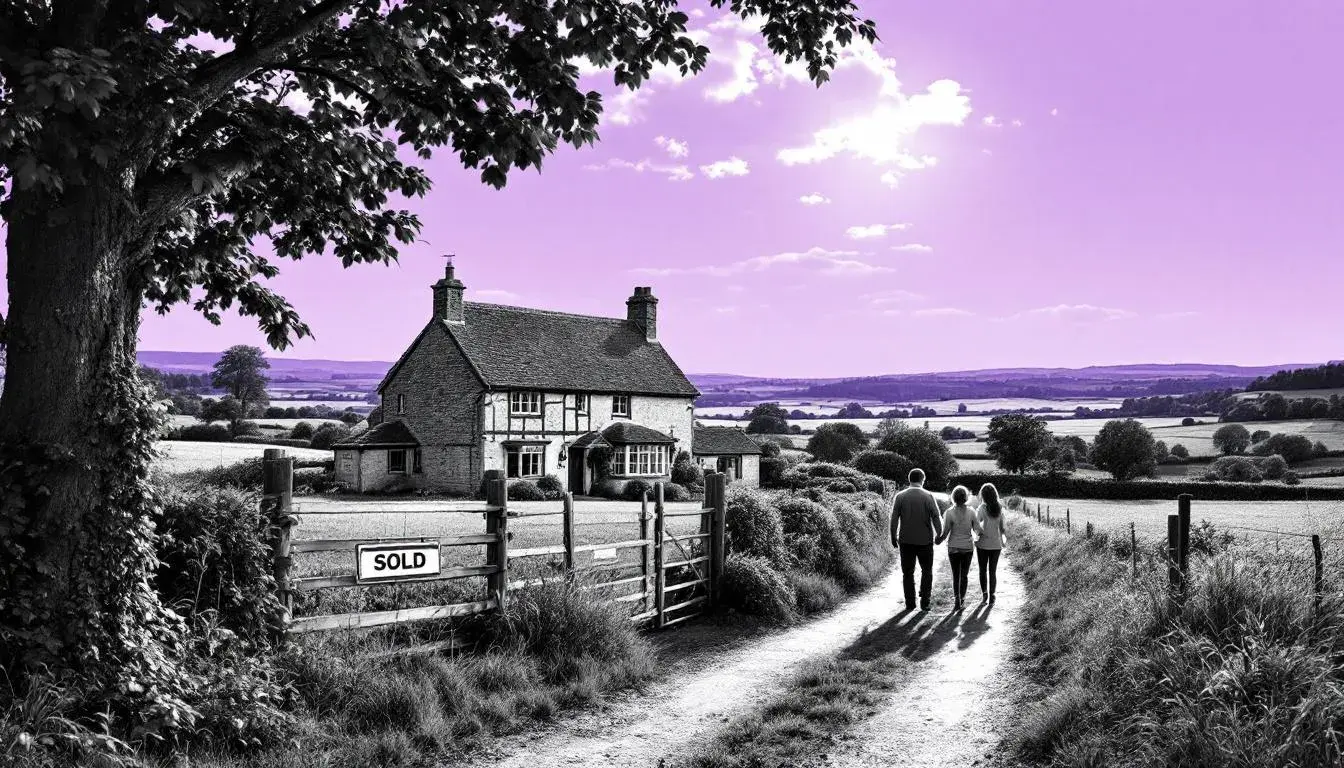
Fast-track funding for countryside buys
Rural properties move quickly. A desirable farmhouse or smallholding can attract multiple bidders in days, especially at auction. Traditional mortgages often struggle to keep pace due to survey lead times, unique construction, or access issues common outside towns. Bridging finance exists to solve that timing gap, providing short-term funding to secure the property while you arrange a longer-term plan.
Average completion from offer to funds is around 43 days, markedly quicker than standard mortgages, and auction purchases can complete in roughly 38 days. In competitive rural markets, that speed can be the difference between winning and watching the opportunity vanish.
Speed and certainty win rural deals that mainstream lending cannot reach.
The market is scaling to meet demand. UK bridging loan books surpassed £10bn in 2024 and are forecast to reach £12.2bn by the end of 2025. Quarterly completions have accelerated, reflecting the appeal of flexible underwriting and pragmatic decision-making. Rates remain competitive for short-term borrowing, with average monthly pricing around 0.64%, and many lenders signalling room for further reductions. For buyers facing upfront refurbishment or EPC upgrades typical of older countryside homes, this can be a cost-effective bridge to sale or refinance.
Affordability and leverage remain measured. The average loan-to-value sits near 52.79%, with some lenders reaching up to 75% on suitable security. Borrowers often use equity in another property to reduce cash outlay, particularly in buy-before-sell scenarios. Exit strategies tend to be straightforward: most borrowers sell the property once improved, while a substantial minority transition to a buy-to-let remortgage.
Use cases are broad. Chain-breaking loans now account for nearly a quarter of cases, preventing fall-throughs that cost UK movers billions each year. Rural auctions are a significant driver too, enabling fast purchases of cottages, farms and uninhabitable dwellings priced below market value. Terms are evolving to suit slower rural sales cycles, with many lenders now comfortable with 12 to 15-month tenors. Larger loans are increasingly common, reflecting rising values and development ambitions beyond basic refurbishments.
Bridging is available in both regulated and unregulated forms. Regulated loans cover your main residence, while unregulated facilities suit investment, development and commercial scenarios. The investor segment has grown strongly, supported by landlord demand for conversions, HMOs and energy improvements where traditional lenders hesitate.
Bridging is not a one-size solution. It is a precise tool for specific circumstances: short-term, secured, with a clear exit. When used correctly, it gives rural buyers the confidence to move at the speed of the market.
Is this you?
You have found a rural property that needs swift action. Perhaps it is an auction lot that requires refurbishment, a farmhouse with non-standard construction, or a cottage where the seller wants a rapid, chain-free completion. You may be waiting on the sale of your current home or need time for planning, EPC upgrades, or farm outbuildings to be regularised.
If you are a homeowner, investor, landlord or self-employed buyer who values speed and certainty over lengthy processing, bridging finance can provide the short-term funding to secure the property and protect your plans. It is also suited to chain breaks, probate sales, and situations where mainstream lenders are cautious due to rural valuations or limited comparables.
Ways bridging can help
Buy before you sell - secure the new rural home and exit on sale.
Auction purchases - complete fast and fund required refurbishments.
Chain-break solutions - keep a collapsed chain on track.
Light development - convert barns or outbuildings subject to consents.
EPC and green upgrades - finance improvements before remortgaging.
Investor acquisitions - purchase buy-to-let or HMO stock in villages.
Capital raise - release equity against multiple properties as security.
Costs, impact and risk at a glance
| Aspect | Typical figure | Why it matters |
|---|---|---|
| Completion speed | Around 43 days (c. 38 at auction) | Helps secure scarce rural stock before competitors. |
| Interest rate | c. 0.64% per month | Competitive short-term cost compared with missing the deal. |
| Arrangement fees | Commonly 1% to 2% | Added to the loan or paid on completion. |
| Valuation and legal | Case-by-case | Rural assets may require specialist reports and dual representation. |
| Loan-to-value | Average 52.79% - up to 75% | Lower equity strain; cross-security can increase leverage. |
| Term length | Commonly 12 to 15 months | Aligns with slower rural marketing and sales timelines. |
| Exit routes | c. 75% sale, c. 19% remortgage | Plan your exit at the outset and monitor milestones. |
| Key risks | Delays, market shifts, cost overruns | Build contingency to prevent exit pressure. |
Who qualifies
Lenders assess security, plausibility of the project and clarity of exit rather than purely income. In rural settings, they will look closely at title, access, services and any agricultural or planning designations. Non-standard construction, listed status or uninhabitable condition are not automatic barriers, but valuations and legal work must support the case.
A strong application will show verified identity, proof of funds for fees and works, evidence of planning or permitted development where relevant, and a realistic schedule that acknowledges rural contractor lead times. If your exit is sale, support it with local agent commentary and conservative pricing. If the exit is refinance, factor in stress-tested mortgage affordability and the time required to complete EPC targets.
Kandoo is a UK-based retail finance broker that connects you with a panel of lenders covering regulated and unregulated bridging. We help shape the case, anticipate rural valuation issues, and match you to lenders comfortable with farms, smallholdings, conversions and multi-asset security.
From enquiry to funds
Share your property details and intended exit strategy.
Receive indicative terms and confirm your loan structure.
Instruct valuation and provide supporting documents promptly.
Solicitors begin legal work and address title considerations.
Final offer issued after underwriting and valuation review.
Sign documents, complete, and funds are released to you.
Execute works, list the property or progress remortgage.
Redeem the bridge on sale or refinance completion.
Upsides and trade-offs
| Pros | Cons |
|---|---|
| Quick access to funds to secure rural opportunities | Higher total cost than long-term mortgages |
| Flexible on property condition and use | Requires a clear and credible exit plan |
| Terms aligned to slower rural sales cycles | Legal and valuation can be more complex |
| Ability to use multiple properties as security | Market or planning delays can extend timelines |
| Works and upgrade funding alongside purchase | Interest can roll up, increasing balance |
Checkpoints before you commit
Run the numbers using realistic timelines and conservative valuations. Rural properties can take longer to market and may need specialist contractors, so build sufficient contingency for costs and delays. Clarify access rights, boundaries, services and agricultural restrictions early to avoid late legal surprises. If your plan relies on refinance, speak to a potential long-term lender upfront and understand EPC requirements and affordability tests. Fix your improvement scope, get comparative quotes and confirm you can complete works within the bridge term. Above all, define your exit clearly, monitor milestones weekly and be ready with a fallback such as extending the term or switching exit route if conditions change.
Alternatives to consider
Longer completion with a conventional mortgage if condition allows.
Vendor finance or delayed completion with a small deposit.
Development finance for heavier refurbishments or ground-up builds.
Second charge on existing property to raise deposit capital.
Joint venture equity if leverage or credit limits are constrained.
Your questions answered
Q: How expensive is bridging compared with a mortgage? A: Pricing is monthly, typically around 0.64%. For short periods, the absolute cost can be competitive once you factor in the opportunity secured and potential uplift from works.
Q: How quickly can I complete on a rural auction lot? A: With a clean title and responsive parties, completions around 38 days are achievable. Having documents ready and instructing valuation immediately helps maintain pace.
Q: What loan-to-value can I expect? A: Many cases land near 50% to 60% LTV. Some lenders go to 75% where security and exit are strong, especially with additional property offered as collateral.
Q: What if my exit is delayed? A: Communicate early. Extensions or refinance may be possible, but incur costs. Build time buffers and contingency to reduce pressure and preserve equity.
Q: Are uninhabitable or non-standard rural properties acceptable? A: Often yes. Bridging is designed for properties that need work. Valuation and legal due diligence must support the case and scope of refurbishment.
Q: Can I roll up interest rather than pay monthly? A: Many lenders allow interest to be retained or rolled up, subject to LTV limits. This improves cash flow during works but increases the redemption balance.
How Kandoo helps
Kandoo matches rural buyers and investors with bridging lenders that understand countryside assets. We benchmark rates, fees and terms, pre-empt valuation and legal hurdles, and help you evidence a credible exit. Speak to us early for tailored options and a smoother path from offer to funds.
Important information
This guide is for information only and does not constitute financial advice. Bridging is a secured, short-term facility and your property may be at risk if you do not keep up repayments. Seek personalised advice before proceeding.
You can also use our Bridging loan calculator to estimate interest, fees and total repayment costs.
Buy now, pay monthly
Buy now, pay monthly