Average Speed Cameras Explained
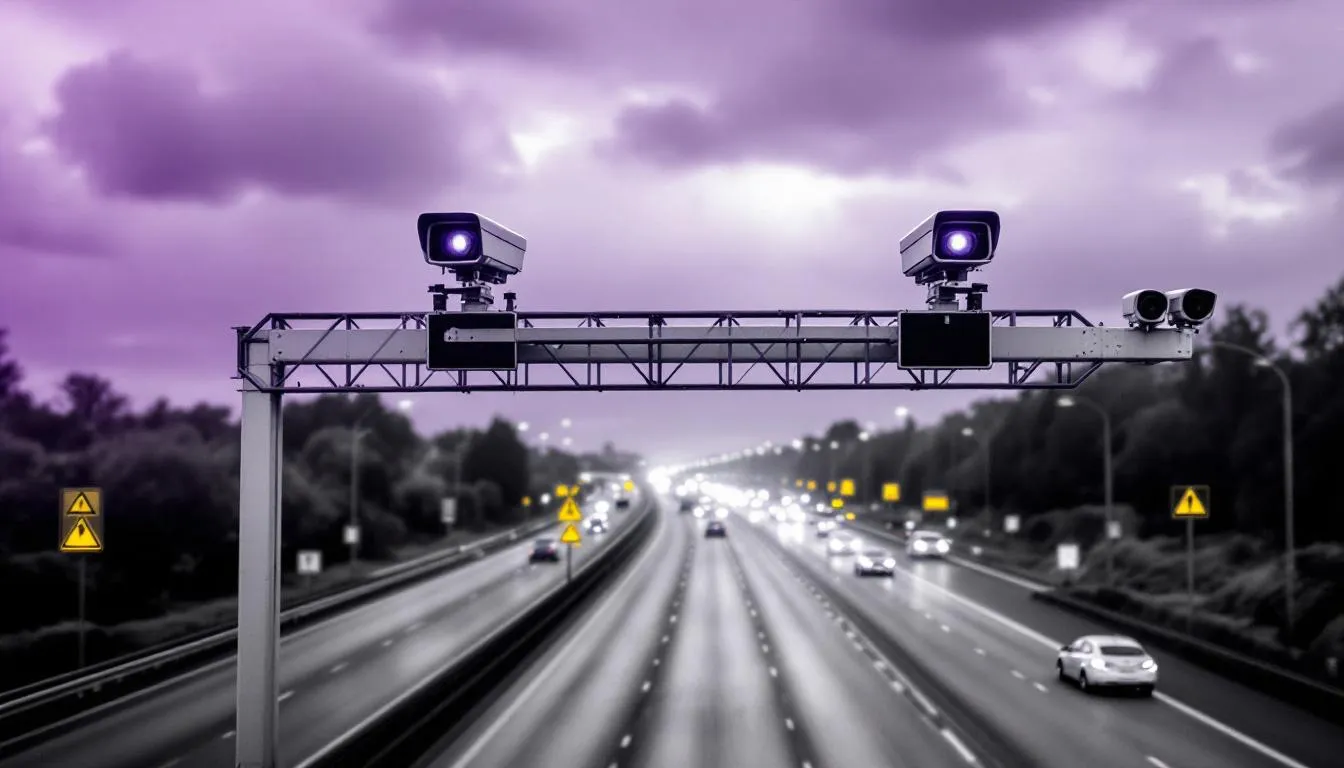
What average speed cameras really measure
Average speed cameras are designed to do one thing very well - encourage consistent, lawful driving over a stretch of road. Instead of capturing a single snapshot like a traditional Gatso, these systems log your number plate using ANPR at one point, then again at a second point at least 200 metres away. Your average speed is calculated from the time taken to travel between them. If it exceeds the posted limit, the system flags the offence and a Notice of Intended Prosecution typically follows.
In Great Britain you will see these systems in many forms. SPECS is the most familiar on motorways, dual carriageways and through villages, operating day and night across multiple lanes with infrared support. In towns and near schools, Siemens SafeZone is common, again using ANPR to calculate average speed along a defined sequence. Newer Vector SR units have been rolled out at scale in Greater Manchester, capable of monitoring both sides of the road simultaneously and detecting additional offences such as mobile phone use. Networked technologies like SpeedSpike can link hundreds of cameras to monitor wider areas bidirectionally.
This matters because old habits used to fool spot cameras - braking hard then speeding up - simply do not work. Average speed checks promote steadier speeds, smoother traffic and better safety, including at temporary roadworks where limits protect crews. Enforcement is not paused for darkness or rain. Infrared and all-weather optics allow 24-7 operation without flashes that distract drivers.
Understanding your exposure is the first step to avoiding points and fines.
Penalties are straightforward. Many forces follow a 10% plus 2 mph threshold as guidance, some use 10% plus 3 mph, while others apply zero tolerance. Anything above the limit is illegal, and thresholds are not guaranteed or always public. A fixed penalty is usually £100 and 3 points, rising to higher fines or short bans for serious cases, and more on motorways. The smartest move is simple - drive to the posted limit consistently from camera to camera.
Who benefits from knowing this
If you drive in the UK - commuting on the M1, school runs through 20 mph zones, or regular A-road trips - this guidance is for you. New drivers protecting a clean licence, delivery professionals clocking high mileage, and motorists in leased or company cars all face the same enforcement rules. It is equally relevant if you are weighing up a sat-nav upgrade with speed alerts or considering a refresher course to tighten habits. Understanding how average speed systems operate, where they appear, and what penalties apply helps you budget, plan routes and avoid the hidden costs of points on your licence and increased insurance.
Practical choices to stay compliant
Stick to posted limits from entry sign to exit sign.
Use sat-nav or app alerts for speed limits and zones.
Enable your car’s speed limiter or cruise control.
Take a speed awareness course if offered.
Maintain tyres and brakes for steady, predictable control.
Plan journeys to avoid rushed, risky driving.
If you receive a NIP, respond accurately and on time.
Consider telematics insurance to reinforce safer habits.
Costs, impact and risk at a glance
| Option | Cost | Impact on Compliance | Likely Return | Key Risks |
|---|---|---|---|---|
| Drive to the limit | £0 | High - immediate effect | Avoid fines and points | Requires sustained attention |
| Sat-nav or app alerts | £0-£150 | High - constant prompts | Fewer unintended breaches | Over-reliance or outdated maps |
| Speed limiter or cruise control | Included in many cars | High on steady roads | Smoother driving, better mpg | Inappropriate in busy urban traffic |
| Speed awareness course | £90-£120 | Medium-high - behaviour change | No points if eligible | Not always offered, time commitment |
| Vehicle maintenance | £50-£300 | Medium - stable control | Safer stopping, confidence | Neglect undermines benefits |
| Journey planning | £0 | Medium | Reduced stress, fewer lapses | Unplanned delays still happen |
| Telematics insurance | Varies by insurer | Medium-high - feedback loop | Possible premium savings | Data privacy concerns |
| Timely NIP response | £0 | High - legal compliance | Avoid escalations | Missed deadlines increase penalties |
Who is liable and when it applies
Average speed rules apply to virtually all motor vehicles in Great Britain - cars, vans, motorcycles and HGVs - and enforcement operates across lanes, day and night, in all weather. The registered keeper will typically receive a Notice of Intended Prosecution within 14 days of the alleged offence. If you were not driving, you must identify who was, usually within 28 days. Company car drivers should ensure fleet managers hold the correct keeper details, as delays can forfeit options such as a speed awareness course. New drivers face particular jeopardy - 6 points within two years of passing can trigger revocation. Motorway offences often carry higher fines. Temporary limits at roadworks are enforced the same way as permanent limits, with clear signage marking the start and end of zones. If you rely on in-car tech to help you comply, ensure maps and software are up to date and that settings reflect local limits. If you are budgeting for safety upgrades such as sat-navs with active speed guidance or advanced driver assistance, Kandoo can help you spread the cost responsibly with access to a panel of lenders.
From entry to outcome - the key stages
Enter zone - limits and camera signs appear.
First camera - ANPR reads plate and timestamp.
Drive steadily - maintain speed at or below limit.
Second camera - plate read and time recorded.
System calculates your average speed.
If above limit, offence is generated.
NIP issued to registered keeper within 14 days.
Driver identified - fixed penalty or next steps.
What to weigh up before you press the accelerator
| Consideration | Upside | Downside |
|---|---|---|
| Safety outcomes | Fewer collisions and injuries | Perceived strictness in low-traffic times |
| Fairness | Measures behaviour over distance | Limited discretion in marginal cases |
| Traffic flow | Smoother speeds reduce bunching | Can feel slow through long zones |
| Evasion difficulty | Lane changes do not defeat ANPR | False confidence leads to penalties |
| Urban protection | Better compliance near schools | Frequent limit changes demand vigilance |
| Technology reach | 24-7, all-weather reliability | Privacy concerns around plate reads |
Read this before your next trip
Tolerances vary by police force. Some apply 10% plus 2 mph, others 10% plus 3 mph, and a few operate zero tolerance. Anything above the limit remains an offence, so treat tolerances as guidance rather than permission. Average speed cameras usually cover multiple lanes, so switching lanes or overtaking will not avoid detection. Temporary systems at roadworks are fully active, with start and end signs marking the enforcement zone. Night-time or heavy rain will not pause enforcement - infrared and ANPR continue to operate. If a NIP arrives, check details carefully, respond within the deadline and keep copies. Consider the wider costs too: three points can raise insurance premiums for years. Invest a moment at the start of each journey to set up navigation alerts and choose a realistic arrival time.
Alternatives if you want extra support
Speed awareness course - learn techniques that stick.
Telematics insurance - data-led coaching and potential savings.
In-car speed guidance - sat-navs or smartphone apps.
Vehicle upgrades - reliable tyres and braking components.
Public transport - avoid driving in most enforced corridors.
Route planning - pick less congested roads where safe and legal.
FAQs
Q: Do average speed cameras allow a margin of error? A: Many forces use 10% plus 2 mph as guidance, some 10% plus 3 mph, and some none. Any speed over the limit can be enforced.
Q: Will changing lanes stop me being recorded? A: No. Systems like SPECS and Vector track vehicles across multiple lanes. Lane changes do not defeat ANPR.
Q: What happens if I briefly exceed the limit? A: Only the average speed over the measured distance counts. Sustained compliance is what matters, not a single brief fluctuation.
Q: Do they work at night and in poor weather? A: Yes. Infrared and all-weather optics enable 24-7 operation without flash, including rain, fog and darkness.
Q: What penalty should I expect if caught? A: Typically a £100 fixed fine and 3 points. Serious cases can mean higher fines up to £2,500, more points or a short ban.
Q: When should a NIP arrive? A: The registered keeper should receive it within 14 days of the alleged offence. You must identify the driver if asked.
How Kandoo can help you drive smarter
Kandoo connects you with a panel of UK lenders so you can spread the cost of practical safety upgrades - from sat-navs with speed alerts to essential maintenance that keeps your car predictable and compliant. If you are budgeting for improvements, we help you compare options and borrow responsibly, so safer driving fits your monthly plan.
Important information
This article is for general guidance only and is not legal advice. Enforcement policies, tolerances and eligibility for courses vary by police force and may change. Always follow posted signs and check local guidance before you travel.
Buy now, pay monthly
Buy now, pay monthly